 Save
Save There's something about the smell of lemon zest hitting hot butter that instantly transports me to my aunt's kitchen on a lazy Sunday afternoon. She'd always have a pound cake cooling on the rack, golden and fragrant, while we'd sit at her table drinking tea and catching up. That cake became my template for understanding how something so simple—just butter, sugar, eggs, and flour—could taste so bright and alive when you let lemon take the lead. Now whenever I make it, I'm not just baking; I'm recreating that feeling of unhurried time and warmth.
I learned this recipe needed tweaking after bringing one to a potluck where it sat next to a competitor's fluffy sponge cake. Mine won over the room not because it was fancier, but because people kept coming back for another slice—something about that dense crumb and the way the lemon didn't fade made it stick with them. That's when I realized the magic wasn't in making it complicated; it was in respecting the balance of what was already there.
Ingredients
- Unsalted butter (1 cup, softened): Room temperature is non-negotiable here because cold butter won't cream properly with the sugar, and creaming is where you trap air to keep the cake tender.
- Granulated sugar (2 cups): This is your foundation for moisture and structure; don't skip it or substitute with alternatives without expecting a different result.
- Eggs (4 large, room temperature): Cold eggs won't blend smoothly into the batter, so pull them out before you start mixing.
- Whole milk (1/4 cup): The small amount keeps the crumb tender without making it wet.
- Fresh lemon juice (1/4 cup): Fresh is the only way; bottled juice tastes tinny and one-dimensional in comparison.
- Lemon zest (2 tablespoons): This is where the soul of the cake lives—zest while the lemons are still firm, and get those oils into your batter.
- All-purpose flour (2 1/2 cups): Measure by spooning and leveling, never scooping straight from the bag, or you'll end up with a dense brick instead of a cake.
- Baking powder (1 teaspoon): The lift that keeps this from sinking into itself.
- Salt (1/2 teaspoon): A pinch of salt amplifies the lemon and balances sweetness in ways you won't consciously notice but will absolutely feel.
- Powdered sugar for glaze (1 cup, sifted): Sifting matters because lumps will catch on your whisk and refuse to smooth into that silky consistency.
Tired of Takeout? 🥡
Get 10 meals you can make faster than delivery arrives. Seriously.
One email. No spam. Unsubscribe anytime.
Instructions
- Set your stage:
- Preheat to 350°F while you gather everything—a warm oven is ready to work the moment your batter is ready. Grease your loaf pan generously or line it with parchment; either way, you're buying yourself peace of mind at the end.
- Cream butter and sugar until clouds form:
- This takes about three to four minutes with an electric mixer on medium speed, and you'll see the mixture transform from grainy and pale to fluffy and light. This is the moment you're building air pockets that will keep your cake tender.
- Introduce eggs one at a time with patience:
- After each egg, wait until it's fully incorporated—about 30 seconds of mixing—before adding the next. Rushing this step can curdle your mixture.
- Blend the wet ingredients separately:
- Milk, lemon juice, and zest go into their own bowl and get whisked together so the zest distributes evenly. This is also where you taste the balance of tartness and decide if you want it brighter.
- Combine dry ingredients in their own space:
- Whisk flour, baking powder, and salt together so the leavening is evenly spread throughout and won't create pockets of dense cake.
- Fold everything together with restraint:
- On low speed, add flour mixture and milk mixture alternately—flour, then milk, then flour, ending with flour. Overmixing at this point develops gluten, which turns your delicate cake tough and rubbery. Mix just until you don't see streaks of flour anymore.
- Pour and smooth:
- Transfer batter into your pan and use an offset spatula or the back of a spoon to even out the top. A level surface bakes more evenly.
- Bake until golden and set:
- Fifty to fifty-five minutes should do it, but start checking at 48 minutes with a toothpick in the center. When it comes out clean with just a crumb or two clinging to it, you're done.
- Cool with patience:
- Leave it in the pan for 10 minutes so it firms up enough to turn out without collapsing, then onto a rack to cool completely. This prevents the bottom from sweating and getting soggy.
- Glaze when ready to serve:
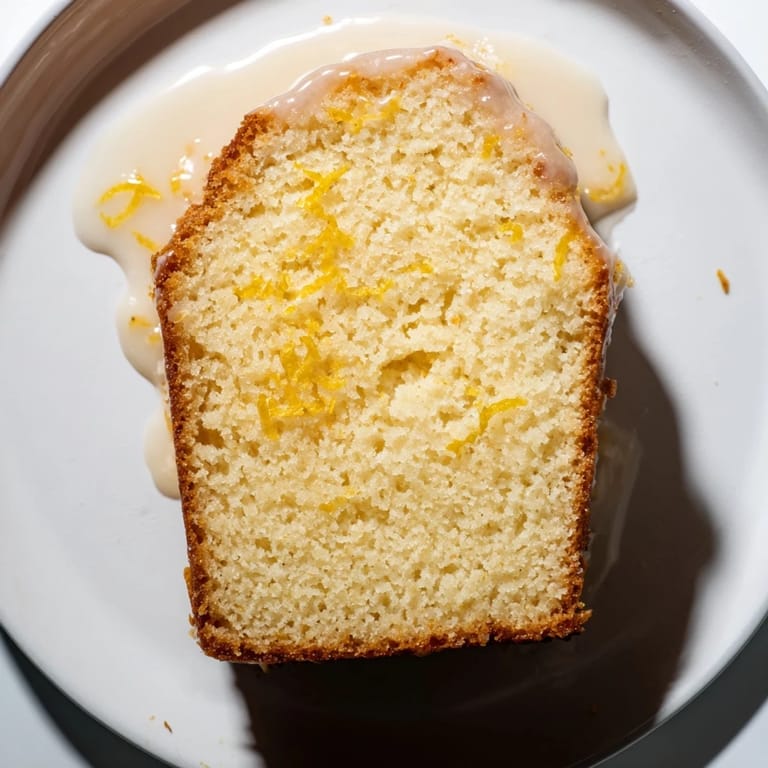
- Whisk powdered sugar and lemon juice until smooth and pourable—it should coat the back of a spoon but still flow off gently. Drizzle it over the cooled cake and let it set for at least 15 minutes before slicing.
 Save
Save I once brought this cake to a friend's house during a difficult time in her life, and she later told me that the quiet ritual of having a slice with her morning coffee became something she looked forward to each day. That's when I understood that a pound cake isn't just dessert—it's permission to slow down and feel small moments of joy when everything else feels overwhelming.
Why This Cake Stands the Test of Time
Pound cake has been around since the 18th century, and the reason is simple: it works. The original formula was literally one pound of each main ingredient, and while we've fine-tuned it, the principle remains unshaken. What makes this version different is the lemon, which transforms a quiet, butter-forward cake into something with personality and presence. The lemon zest adds visual flecks and aromatic punch, while the juice brings a subtle tartness that keeps sweetness from becoming cloying. It's the kind of cake that improves as it sits, the crumb becoming more tender and the flavors settling into each other like people getting comfortable in a conversation.
Storage and Make-Ahead Magic
One of the best things about pound cake is that it actually tastes better the next day, once the crumb has had time to settle and the flavors have married. Wrap it tightly in plastic wrap or store it in an airtight container at room temperature for up to three days—no refrigerator needed unless your kitchen is particularly warm. You can also freeze the unglazed cake for up to a month, then thaw it at room temperature and add the glaze whenever you're ready. This is the cake you bake on a Tuesday evening and forget about until Thursday morning, when you suddenly remember you have the perfect thing to serve with coffee.
Ways to Make It Your Own
The beauty of pound cake is that it's a vehicle for flavor without being a vehicle for chaos. A half teaspoon of lemon extract added to the batter amplifies the brightness if you're serving it to people who love citrus aggressively. Fresh berries scattered on top or served alongside add color and a bright, juicy counterpoint to the richness. Whipped cream spiked with a little lemon zest, or even a dollop of Greek yogurt, transforms it from casual to something that feels like a proper dessert course.
- A thin dusting of powdered sugar instead of the glaze keeps it refined and less sweet if you're pairing it with coffee or tea.
- Try toasting thin slices in a dry pan until golden and crispy for breakfast, then butter them while they're still warm.
- Add a small handful of poppy seeds to the batter if you want subtle texture and a slightly nutty undertone.
 Save
Save This cake has taught me that sometimes the most memorable flavors are the quiet ones, the ones that don't demand attention but reward the people patient enough to savor them. It's worth making again and again.
Recipe FAQs
- → How can I enhance the lemon flavor in this cake?
Add a 1/2 teaspoon of lemon extract to the batter or increase lemon zest slightly for a stronger citrus note.
- → What is the best way to ensure the cake stays moist?
Carefully alternate adding the flour mixture and lemon-milk mixture, mixing just until combined to avoid a dense result.
- → Can this cake be made ahead of time?
Yes, it keeps well for up to three days at room temperature when wrapped tightly. Ideal for prepping in advance.
- → What are good serving suggestions to complement this cake?
Serve with fresh berries, whipped cream, or a cup of tea to balance the tangy glaze and rich crumb.
- → How do I know when the cake is fully baked?
Insert a toothpick into the center; it should come out clean or with a few moist crumbs when done.