 Save
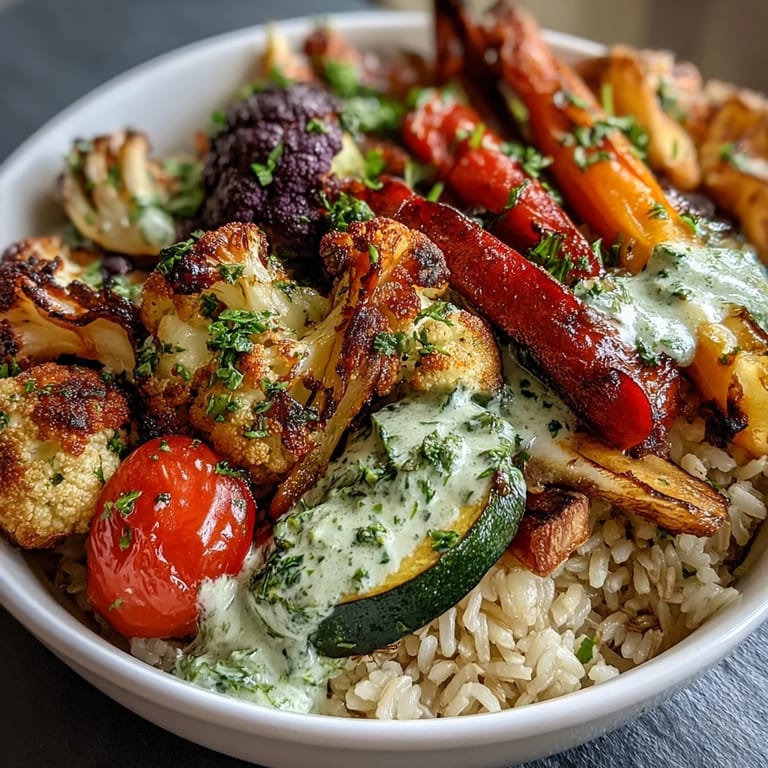
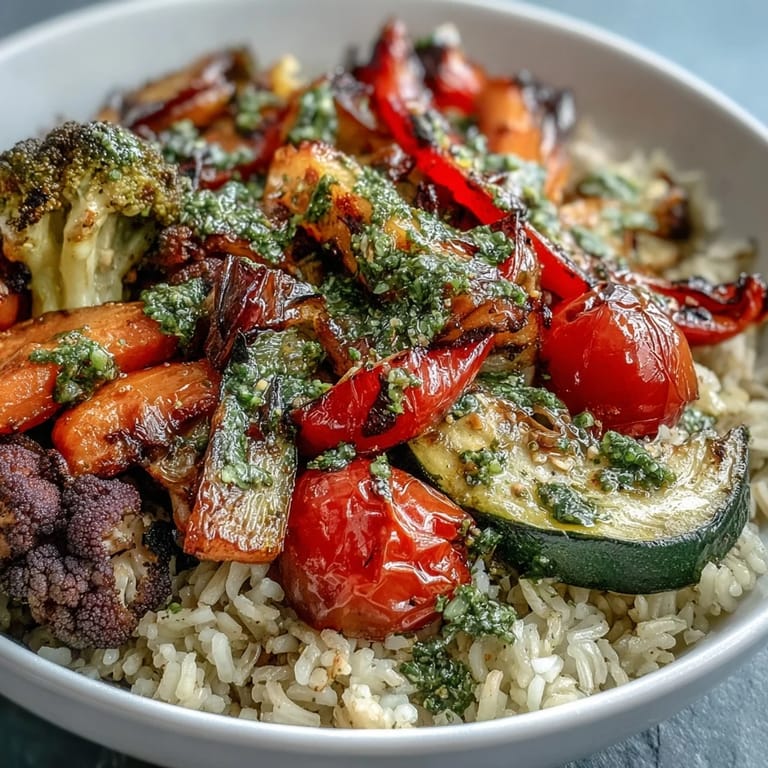
Save Last Tuesday, I was standing in my kitchen staring at a farmers market haul that looked like someone had dumped a paint palette on my counter. Red peppers, golden squash, purple cauliflower, bright green broccoli—it was almost too pretty to chop up. But then my partner wandered in asking what was for dinner, and I realized the answer had been sitting there all along: roast everything, build a bowl, drizzle it with something green and alive. That simple moment turned into this rainbow roasted vegetable bowl, which has become my go-to answer whenever I want something that feels both nourishing and joyful on the same plate.
I made this for a potluck last spring where everyone brought their usual heavy casseroles, and I watched this vibrant bowl sit out while people kept coming back for thirds. Someone asked if it was healthy, as if they were surprised something this colorful could also be this filling. By the end of the night, I had an empty dish and three people asking for the recipe, which is when I knew I'd stumbled onto something worth keeping.
Ingredients
- Red and yellow bell peppers: These are your sweetness and brightness—don't skip one or the other because they each bring different flavor notes that matter.
- Purple cauliflower: If you can find it, grab it for the visual drama, though regular cauliflower works just as well and roasts just as beautifully.
- Broccoli florets: They get crispy on the edges when roasted hot enough, which is honestly the best part.
- Cherry tomatoes: Halve them so they cook through and concentrate their sweetness instead of just sitting there whole.
- Zucchini and carrot: Slice them roughly the same thickness so everything finishes cooking at the same time.
- Olive oil, salt, and pepper: These aren't optional—they're what coax out the vegetables' natural caramel.
- Brown rice: The grain base that makes this actually filling; rinsing it first removes excess starch.
- Fresh herbs for the sauce: Parsley, cilantro, and basil are your flavor foundation—use whatever looks freshest at your market.
- Lemon juice: This is the brightness that keeps the whole bowl from feeling heavy.
- Extra virgin olive oil for the sauce: Drizzle this generously because it's what carries all those herb flavors to your mouth.
Tired of Takeout? 🥡
Get 10 meals you can make faster than delivery arrives. Seriously.
One email. No spam. Unsubscribe anytime.
Instructions
- Heat your oven and prep the vegetables:
- Turn your oven to 425°F and while it's preheating, chop all your vegetables into roughly similar-sized pieces so they roast evenly. This is the moment where it hits you how colorful this meal is going to be.
- Toss with oil and seasonings:
- Spread everything on a large baking sheet, drizzle generously with olive oil, then season with salt and pepper. Use your hands to toss it around—make sure every piece gets coated, because that's what creates those caramelized edges.
- Roast until golden:
- Slide the sheet into the hot oven and set a timer for about 15 minutes, then give everything a good stir. You're looking for tender vegetables with some charred spots, which usually happens around 25 to 30 minutes total. The smell alone will tell you when you're getting close.
- Cook the brown rice:
- While vegetables are roasting, rinse your brown rice under cold water in a fine mesh strainer, then add it to a saucepan with water and salt. Bring to a boil, reduce heat to low, cover, and let it simmer undisturbed for about 30 to 35 minutes until the rice is tender and the water is absorbed.
- Blend the herb sauce:
- Chop your fresh herbs roughly, then throw them in a blender or food processor along with lemon juice, a small garlic clove, olive oil, salt, and pepper. Blend until you have a bright green sauce that's still a little textured—you want to taste the herbs, not just taste smoothie.
- Assemble your bowls:
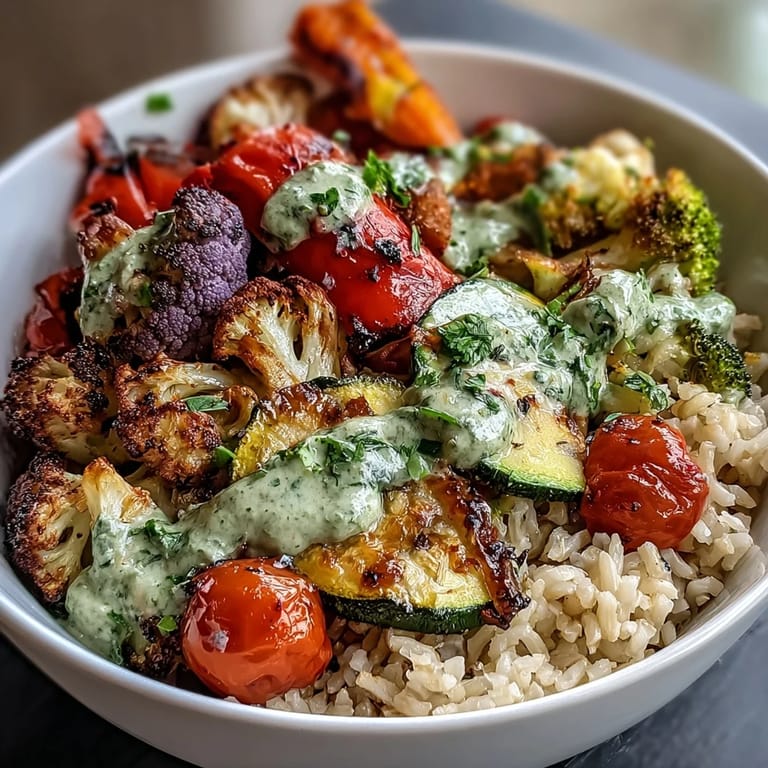
- Fluff the rice with a fork and divide it among bowls, then pile the roasted vegetables on top. Drizzle the herb sauce over everything right before eating so it stays bright and doesn't get absorbed into the warm rice.
 Save
Save There's something quietly powerful about eating a bowl of food where every color means something different—where you're actually getting the full spectrum of nutrients, not just going through the motions of a meal. This bowl does that without making you feel like you're being virtuous or punished for caring about what you eat.
Why Roasting Changes Everything
Raw vegetables are fine, but roasted vegetables are a different animal entirely. The heat unlocks sweetness, creates texture, and gives you something substantial to sink your teeth into instead of just crunchy raw pieces. I learned this the hard way by trying to make this bowl with raw vegetables once, thinking it would be faster, and ended up with something that felt incomplete and thin. Now I always roast first and ask questions later.
The Herb Sauce Is the Whole Point
This sauce is what separates a healthy bowl from a bowl that actually tastes like something you want to eat. It's bright, it's alive, and it brings all the roasted vegetables together into one cohesive experience instead of just a pile of sides. I've made this bowl without the sauce in a pinch, and while it's still good, it's missing the thing that makes people ask for the recipe.
Building Your Own Version
The beauty of a vegetable bowl is that it's built for improvisation. Swap out whatever vegetables are in season or on sale—sweet potatoes, red onion, asparagus, whatever speaks to you at the market. You can add chickpeas or crumbled tofu for extra protein, or simply enjoy it as is if you're eating lighter. The structure is flexible enough to bend to whatever you have on hand.
- Try roasting with a pinch of smoked paprika or cumin for a different flavor direction.
- Leftover rice and roasted vegetables make an excellent cold bowl the next day if you pack the sauce separately.
- This scales up beautifully for meal prep or feeding a crowd without any fussing.
 Save
Save This bowl has become my answer to the question I ask myself most days: what's for dinner that won't leave me feeling empty or guilty? It's simple, it's colorful, and it actually tastes like care.
Recipe FAQs
- → What vegetables work best for roasting?
Bell peppers, cauliflower, broccoli, zucchini, carrots, and cherry tomatoes roast beautifully. They hold their shape well and develop sweet, caramelized flavors. You can also add sweet potatoes, red onions, or asparagus based on preference and seasonal availability.
- → Can I prepare the components ahead of time?
Yes. Roast vegetables up to 3 days in advance and store in the refrigerator. Cook brown rice ahead and reheat with a splash of water. The herb sauce stays fresh for 2-3 days in a sealed container. Assemble everything just before serving for best texture and flavor.
- → How do I make this bowl more protein-rich?
Add chickpeas, white beans, or cubed tofu directly to the roasting vegetables for the last 15-20 minutes. You can also serve with a side of grilled tempeh, top with hemp seeds or chopped nuts, or stir in cooked lentils with the rice for extra plant-based protein.
- → What can I substitute for the fresh herbs in the sauce?
Try fresh dill, tarragon, or mint in place of basil. If you lack fresh herbs, use a high-quality pesto or tahini-lemon dressing instead. For a creamy version, blend in avocado or add a tablespoon of Greek yogurt or coconut cream.
- → Can I use other grains besides brown rice?
Absolutely. Quinoa, farro, barley, or wild rice work wonderfully. For a lighter option, try cauliflower rice or serve the roasted vegetables over mixed greens. Each grain brings slightly different texture and cooking time, so adjust accordingly.
- → How should I store leftovers?
Keep components separate in airtight containers for up to 4 days. Reheat vegetables and rice in the oven at 350°F or in a skillet over medium heat. Store sauce separately and drizzle over just before eating. Avoid microwaving to maintain the best texture.