 Save
Save My grandmother kept an angel food cake recipe tucked inside a worn index card, its edges stained from decades of use. She'd pull it out every Sunday after church, moving through the kitchen with such certainty that I never questioned whether this ethereal cake—made from nothing but egg whites and sugar—could actually work. The first time I tried it myself, my hands trembled as I inverted that pan onto a bottle, whispering a small prayer that gravity and physics wouldn't betray me.
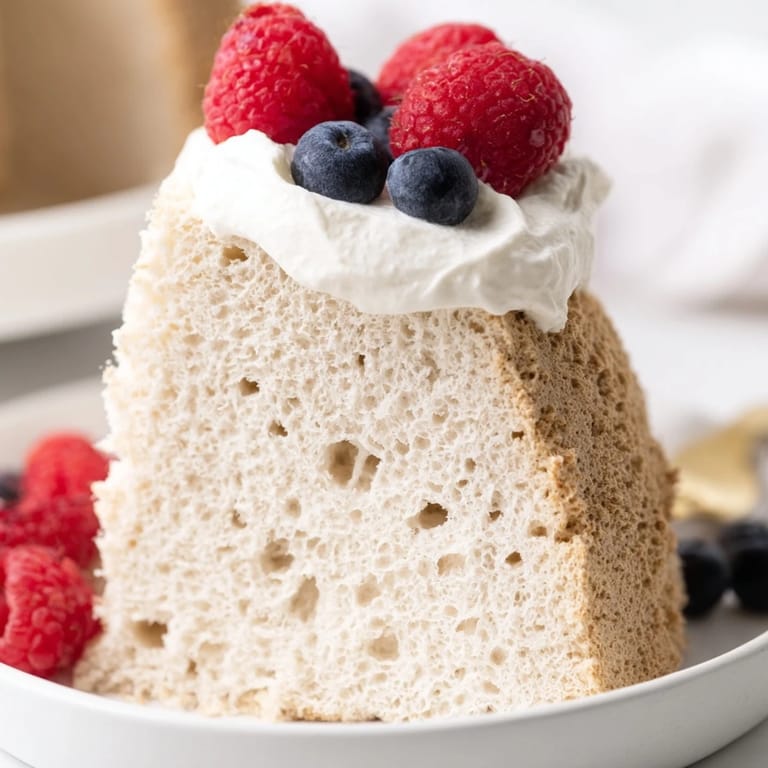
I made this cake for my friend Sarah's birthday picnic last summer, and I'll never forget her face when she took that first bite—like she'd discovered something she didn't know she was missing. Someone had brought a berry coulis, and watching the jam pool into the cake's tender crumb felt like watching a small dessert miracle unfold on a paper plate under the trees.
Ingredients
- Cake flour (1 cup, sifted): This matters more than you'd think; it's softer and more refined than all-purpose, which means your cake stays genuinely airy instead of dense and brick-like.
- Granulated sugar (1½ cups, divided): Some goes into the flour mixture for structure, the rest gets beaten into the egg whites to create those glossy, stiff peaks that are honestly mesmerizing to watch.
- Fine salt (¼ teaspoon): A whisper of salt that somehow makes the sweetness sing without announcing itself.
- Large egg whites (12, room temperature): This is non-negotiable—cold eggs won't whip properly, and any stray yolk will sabotage your whole endeavor, so separate them carefully.
- Cream of tartar (1½ teaspoons): This stabilizes the egg whites and helps them hold their peaks, a small chemical miracle that keeps everything from deflating.
- Pure vanilla extract (1 teaspoon): The backbone of flavor; don't skip this or use imitation if you can help it.
- Almond extract (½ teaspoon, optional): A subtle enhancement that adds warmth and complexity without screaming almond; you'll taste it only as a whisper.
Tired of Takeout? 🥡
Get 10 meals you can make faster than delivery arrives. Seriously.
One email. No spam. Unsubscribe anytime.
Instructions
- Prepare Your Space:
- Preheat the oven to 350°F and make absolutely sure your tube pan is grease-free and completely dry—any trace of oil will prevent the batter from climbing those walls and reaching its full potential.
- Build the Dry Foundation:
- Sift together the flour, ¾ cup sugar, and salt, then sift the mixture two more times into a clean bowl, because this aeration is what gives the cake its signature delicate crumb. Set it aside and try not to jostle it around too much.
- Whip the Egg Whites:
- In a large, impeccably clean bowl, begin beating the egg whites on medium-high speed until they're foamy and cloud-like. Add the cream of tartar and keep going until you see soft peaks forming—they'll hold for a moment before drooping back down.
- Sweeten and Stabilize:
- Gradually sprinkle in the remaining ¾ cup sugar while beating, a little bit at a time, watching as the mixture transforms into something glossy and stiff that stands in proud peaks. Add the vanilla and almond extracts with a gentle hand, folding them in rather than beating.
- Fold in the Dry Ingredients:
- This is where patience becomes essential: scatter the flour mixture over the egg whites in three additions, gently folding with a spatula after each one, moving slowly and deliberately so you don't deflate all that beautiful air you've worked so hard to trap.
- Transfer to the Pan:
- Spoon the batter into your ungreased tube pan, smooth the top, and then run a thin knife through it in a figure-eight pattern to burst any oversized air pockets that would create tunnels in the final cake.
- Bake Until Golden:
- Slide it into the oven for 35 to 40 minutes, until the cake is golden brown on top and springs back when you touch it lightly—your kitchen will smell incredible, a sweet, delicate aroma that makes everyone stop and ask what you're baking.
- The Crucial Inversion:
- The moment it comes out of the oven, flip that pan upside down onto a bottle or wire cooling rack—this prevents the cake from collapsing as it cools, and yes, it really does work. Leave it completely undisturbed for an hour or two until it's fully cooled.
- Release and Serve:
- Once cool, run a thin knife around the edges and the center tube, then turn it right-side up and gently release it onto a serving plate. Slice with a serrated knife using a gentle sawing motion rather than pressing down.
 Save
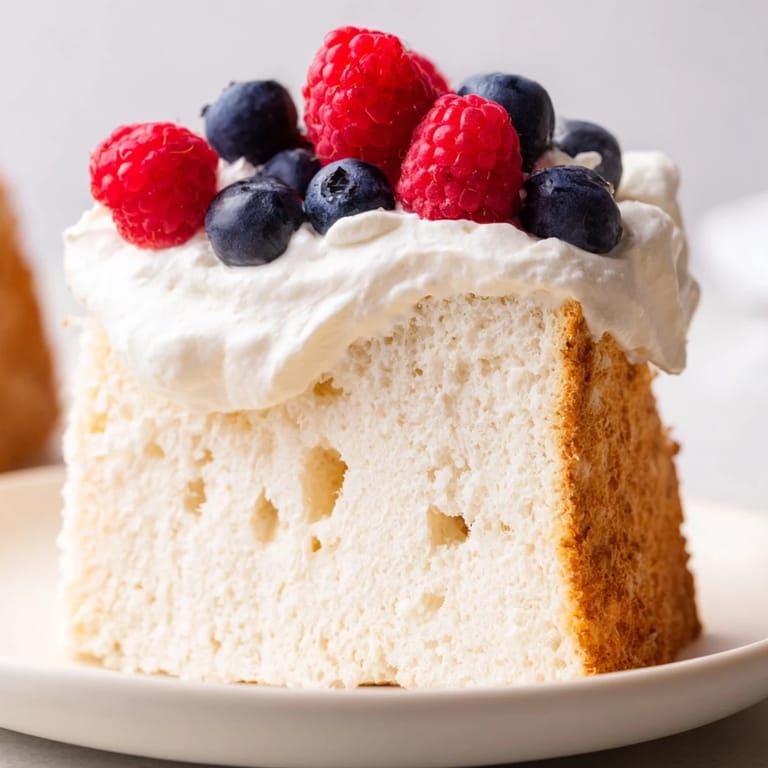
Save There's a particular joy in slicing into a cake you've inverted and cooled upside down, half-convinced it won't work, only to find that cloud-soft crumb waiting inside. My sister once brought one of my angel food cakes to a potluck and three people asked for the recipe that night—I've never seen her look quite so proud, or quite so entertained by the fact that I'd made something that could impress her friends.
Why This Cake Endures
Angel food cake exists in that magical category of desserts that feels indulgent while being remarkably restrained—no butter, no oil, no cream cheese, just the pure alchemy of whipped eggs and sugar. There's something almost meditative about making it, the way each step builds on the previous one, requiring patience and attention but never fussiness. It's the kind of cake that reminds you why baking matters, why precision and care produce results that simple ingredients alone never could.
Serving and Storage Wisdom
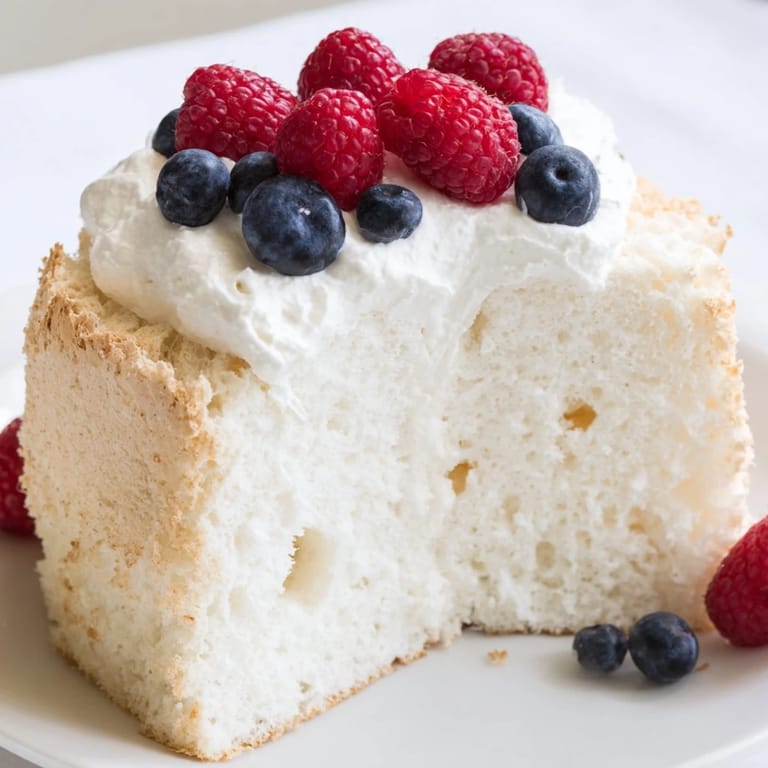
This cake stays remarkably fresh for three or even four days when stored under a cake dome or wrapped loosely in plastic wrap, which means you can bake it ahead without stress. The beauty is in its versatility—serve it naked and simple, or crown it with fresh berries, a cloud of whipped cream, or even a light berry coulis that pools into the tender crumb. I've learned that slightly stale angel food cake is actually delightful when brushed with fruit juice and toasted gently in the oven, which transforms it into something almost like a rustic cobbler when paired with ice cream.
Troubleshooting Your Angel Food Journey
If your cake turns out dense or sunken, you likely overfolded the dry ingredients or the oven temperature wasn't accurate—invest in an oven thermometer because I've discovered that most home ovens run hotter or cooler than we think. A cake that rises beautifully but then collapses usually means either a trace of yolk made it into the whites or the pan wasn't completely grease-free. If the top browns too quickly while the inside stays raw, tent it loosely with foil and bake a few minutes longer at a slightly lower temperature.
- Room temperature eggs beat faster and hold more air, so plan ahead and leave them on the counter for 30 minutes before separating.
- A copper bowl isn't required but does make beating egg whites easier, though a perfectly clean glass or metal bowl works just fine.
- Fresh eggs actually separate more cleanly than very old ones, a small discovery that changed how I plan my baking schedule.
 Save
Save Every time I make this cake, I think about my grandmother and that stained index card, and how she managed to turn something so humble into something so extraordinary. It's a cake that rewards patience and care, that asks you to slow down and trust the process, and somehow always delivers something that feels a little bit like magic.
Recipe FAQs
- → Why must the pan be ungreased?
The batter clings to the sides of an ungreased tube pan, allowing it to rise properly and maintain its airy texture.
- → How does folding the flour mixture affect the texture?
Gently folding prevents deflating the whipped egg whites, preserving the cake's light and fluffy structure.
- → What causes the cake’s signature lightness?
Whipping egg whites to stiff peaks incorporates air, creating a delicate, airy crumb.
- → Why is the cake cooled upside down?
Inverting the pan while cooling prevents the cake from collapsing and retains its volume.
- → Can almond extract be omitted?
Yes, almond extract is optional and can be skipped or replaced without compromising texture.
- → What flour best suits this cake?
Cake flour is preferred for its fine texture, contributing to the delicate crumb and rise.