 Save
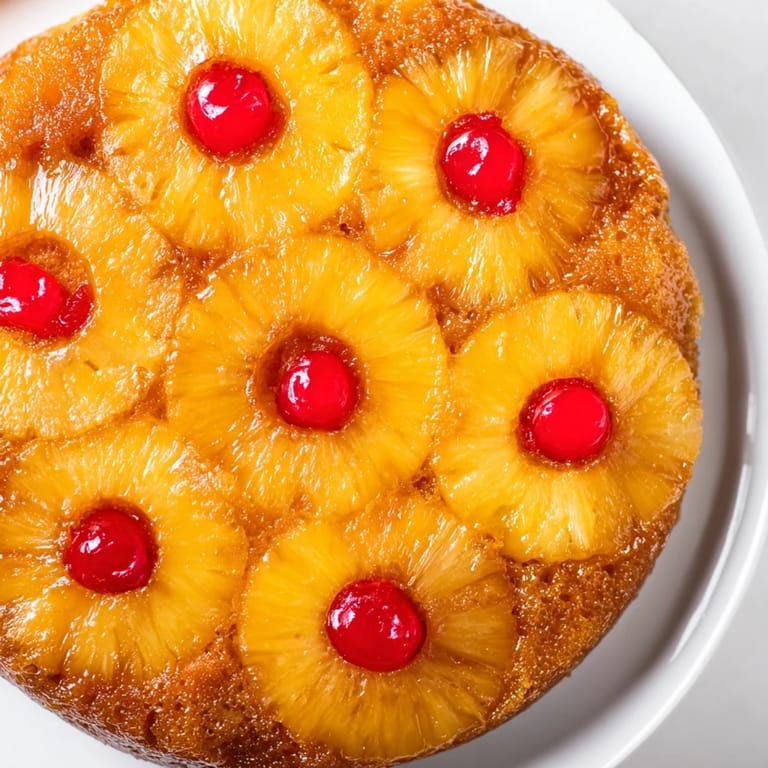
Save My grandmother had this cake perched on a doily in her dining room every Sunday afternoon, and I spent years convinced the golden rings of pineapple were some kind of magic trick until she finally let me watch it bake. The smell of butter and brown sugar melting together is something I chase now—it's comfort wrapped in caramel, and the moment you flip it onto the plate and see that jeweled crown of fruit, you understand why she made it so often. This isn't a complicated recipe, but it feels like one when you're standing in front of that inverted masterpiece, warm and glossy from the oven.
I made this cake for my daughter's eighth birthday party, and watching her face when I flipped it—that suspended moment before the caramel settled and the cherries caught the light—was worth every minute. Her friends went quiet, then erupted, and suddenly I was the person who knew how to make fancy desserts, which felt like winning the lottery of parenthood. It became the cake I'd make whenever someone needed convincing that homemade was better.
Ingredients
- Unsalted butter (60 g for topping, 120 g for cake): The split matters—the bottom butter caramelizes with the sugar to create that glossy amber foundation, while the creamed butter in the batter keeps the cake tender and rich.
- Light brown sugar (150 g, packed): Don't skip the packing step; it compresses the molasses that gives you actual caramel flavor, not just sweetness.
- Canned pineapple rings (8–10): Fresh pineapple can work, but canned rings are drained perfectly and cook consistently—trust the can here.
- Maraschino cherries (8–10): They're retro, they're bright, and they soften into jewel-like pockets of sweetness as the cake bakes.
- Granulated sugar (200 g) and eggs (2 large): These are your cake's structure—creaming them together creates the air pockets that make the crumb light instead of dense.
- Vanilla extract (1 tsp): A small amount, but it whispers beneath everything else, adding depth that vanilla cake should have.
- All-purpose flour (190 g), baking powder (1 1/2 tsp), and salt (1/2 tsp): The salt isn't just for seasoning—it brightens the sweetness and keeps the cake from tasting flat.
- Whole milk (120 ml): The liquid helps the batter spread evenly over the pineapple without disturbing the fruit.
Tired of Takeout? 🥡
Get 10 meals you can make faster than delivery arrives. Seriously.
One email. No spam. Unsubscribe anytime.
Instructions
- Set the stage:
- Preheat your oven to 175°C (350°F) and grease your 23-cm round cake pan generously. You want every surface slippery, so the cake releases cleanly when you flip it.
- Build the caramel base:
- Melt the 60 g butter and pour it into the bottom of the pan, then scatter the packed brown sugar evenly across it. The butter and sugar will pool and caramelize during baking—this is where the magic happens.
- Arrange your jewels:
- Lay the pineapple rings in a single layer, nestling them into the caramel. Pop a cherry into the center of each ring and one in any gaps; they'll stay put once the batter goes on top.
- Cream the cake foundation:
- In a mixing bowl, beat the softened 120 g butter and granulated sugar until the mixture is pale, fluffy, and looks like the color of beach sand. This takes about 3 minutes with an electric mixer and means you've created air pockets that will make the cake rise.
- Add the eggs and vanilla:
- Beat in one egg at a time, letting each one fully incorporate before adding the next. Scrape the bowl between additions so you don't leave any buttery streaks.
- Whisk the dry ingredients:
- In a separate bowl, whisk together the flour, baking powder, and salt. This mixes the leavening evenly so you avoid dense pockets.
- Combine wet and dry:
- Add the flour mixture to the butter mixture in three additions, alternating with the milk and always starting and ending with flour. Stir until just combined—you're looking for streaks of flour to disappear, not for the batter to turn silky; overmixing toughens cake.
- Top and smooth:
- Spoon the batter evenly over the pineapple rings and use a spatula to smooth the top. Be gentle so you don't shift the fruit arrangement.
- Bake to golden:
- Bake for 38–42 minutes, or until a toothpick inserted into the center comes out clean. The top will be golden brown and spring back slightly when you touch it.
- Cool and flip:
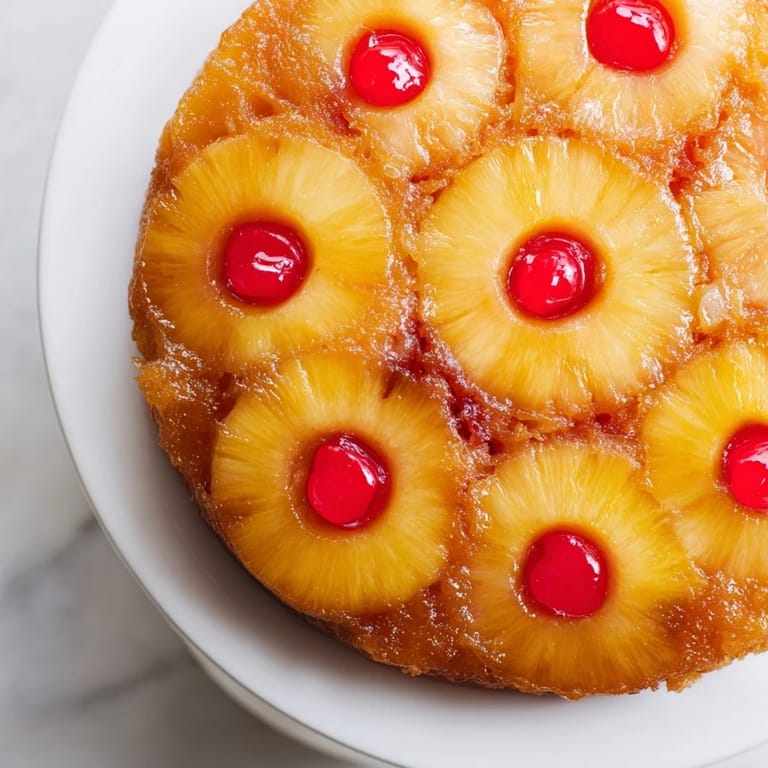
- Let the cake cool in the pan for exactly 10 minutes—this is the sweet spot where it's firm enough to hold together but still warm enough for the caramel to stick. Run a thin knife around the edges, place your serving plate on top, and flip with confidence.
 Save
Save There's a moment, just after you flip it, where you hold your breath waiting to see if the whole thing stays intact or if you've got a cake-shaped disaster on your hands. Every single time, whether it's the hundredth cake or the first, that flip feels like a small risk—and when it works, when all that fruit stays right where you arranged it, there's a tiny thrill. That's when it stops being a recipe and becomes a small triumph you get to share.
Why This Cake Stands Out
Pineapple upside-down cake exists in that comfortable middle ground where it's elegant enough to feel special but simple enough to make on a Tuesday. There's no frosting to wrestle with, no layers to stack; the fruit caramelizes and becomes the decoration, the sauce, the whole statement. What other dessert gets away with being retro and timeless at the same time? This cake doesn't apologize for its sweetness or its brightness—it just shows up and does exactly what it promises.
Serving and Storage
Serve this cake warm if you can, when the caramel is still soft and the cake is tender. A scoop of vanilla ice cream melts right into that caramel, or whipped cream if you're in a lighter mood. Leftovers keep for two days covered at room temperature, and the cake actually stays moist because of all that caramel underneath—it's one of the few desserts that doesn't dry out overnight.
Variations and Swaps
The beauty of this cake is how forgiving it is with substitutions. Fresh pineapple works but needs careful draining so the cake doesn't get soggy. Brown butter elevates the whole thing if you have ten minutes to spare. Some people skip the cherries and use toasted pecans or walnuts for a nuttier spin, or add a tablespoon of pineapple juice to the batter for a subtle tropical whisper that catches you by surprise on the second bite.
- Toast pecans lightly before adding them so they don't taste raw when you bite into a slice.
- If you use fresh pineapple, pat the rings dry with paper towels to prevent the cake from sinking in the middle.
- Try a squeeze of fresh lemon juice mixed into the milk for brightness that deepens without competing with the pineapple.
 Save
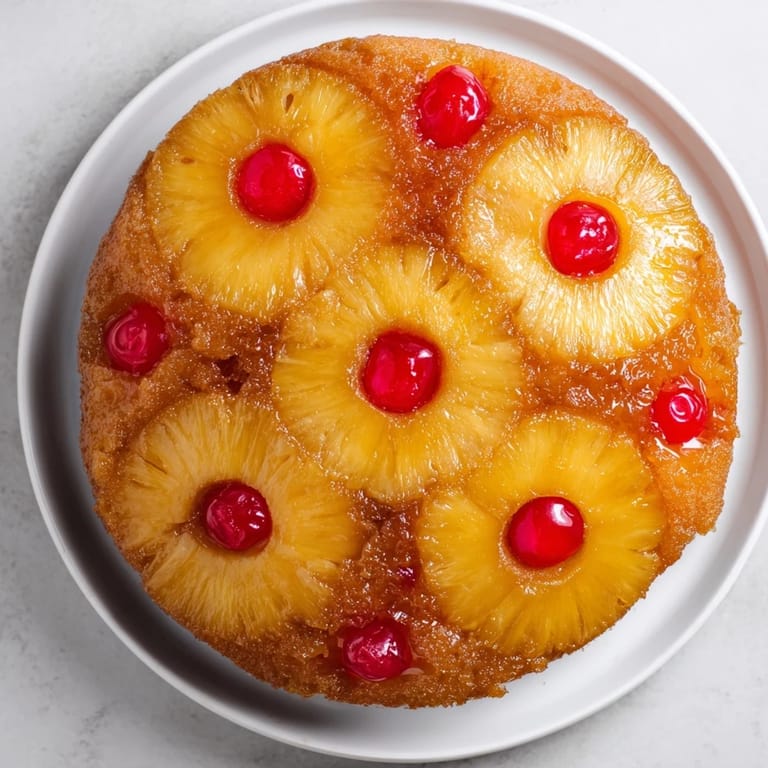
Save This cake is proof that simple, honest cooking never goes out of style. Make it when you need to feel capable, or when someone else needs reminding that homemade is always worth it.
Recipe FAQs
- → How do I prevent sticking when inverting the cake?
Grease the pan thoroughly and ensure the butter and sugar mixture covers the bottom evenly to create a natural release layer.
- → Can fresh pineapple be used instead of canned?
Yes, fresh pineapple rings can be substituted but should be drained well to avoid excess moisture affecting texture.
- → What causes the caramelized topping to be glossy?
The combination of melted butter and brown sugar melts together to form a smooth, glossy caramel layer during baking.
- → Is it important to cool the cake before flipping?
Allowing the cake to cool slightly helps it set, reducing the risk of the topping sliding or breaking when inverted.
- → What are some variations to enhance flavor?
Adding pineapple juice to the batter or substituting cherries with pecans can add new dimensions to the taste and texture.