 Save
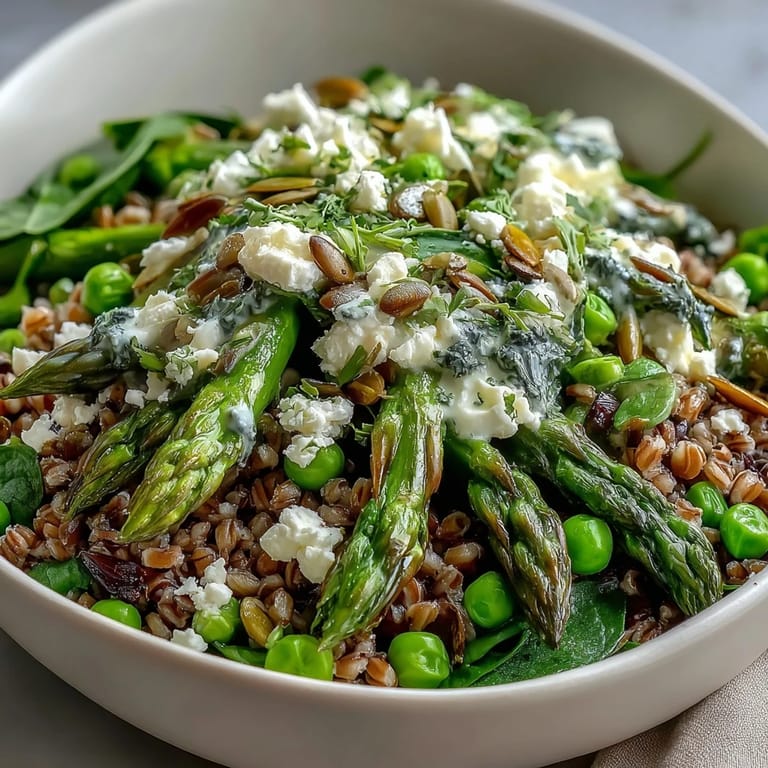
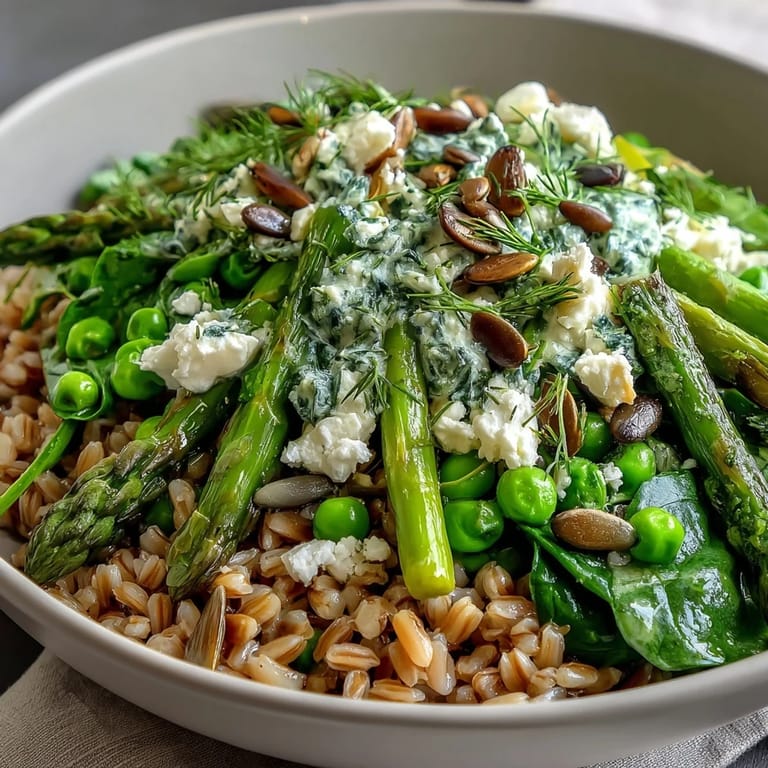
Save Last spring, I was standing in my kitchen on a Tuesday morning when the farmers market bag practically spilled its contents across the counter—bright green asparagus, tender peas still in their pods, and spinach so fresh it was practically humming. I'd been eating heavy all winter, and something about those vivid greens made me want to build something that tasted like the season itself. That's when the Spring Green Bowl came to life, a dish that turned out to be exactly what I needed: simple, colorful, and the kind of meal that makes you feel genuinely nourished.
I made this for a friend who'd just moved back to the city after years away, and she sat at my kitchen counter eating it straight from the bowl, closing her eyes between bites. That's when I knew the recipe was worth holding onto—it wasn't fancy or complicated, but it had somehow become the kind of food that made people slow down and actually taste what they were eating.
Ingredients
- Quinoa, brown rice, or farro (1 cup, 180 g): Choose based on your texture preference—quinoa cooks fastest and has a nutty bite, while brown rice brings earthiness and farro offers a pleasant chew.
- Water (2 cups, 480 ml): Use filtered water if possible, as it keeps the grains tasting clean and bright.
- Salt (½ tsp for grains): Essential for seasoning the grains as they cook, not an afterthought.
- Fresh or frozen green peas (1 cup, 150 g): Frozen actually work beautifully here since they're picked and frozen at peak ripeness.
- Asparagus (1 cup, 120 g, trimmed and cut into 2-inch pieces): The tough woody bottoms have no place in this bowl, so snap off where they naturally break.
- Green beans (1 cup, 120 g, trimmed and cut into 2-inch pieces): These stay crisp-tender when blanched briefly, which is exactly what you're after.
- Baby spinach (2 cups, 60 g): The small leaves wilt down to almost nothing, adding body and nutrition without heaviness.
- Extra-virgin olive oil (3 tbsp): This is where flavor starts, so don't reach for the bargain bottle here.
- Freshly squeezed lemon juice (2 tbsp): Bottled juice tastes tinny compared to the real thing, and your dressing will taste the difference.
- Lemon zest (1 tsp): That tiny bit of brightness makes the entire dressing sing.
- Dijon mustard (1 tsp): The emulsifier that keeps the dressing cohesive and adds a subtle depth.
- Maple syrup or honey (1 tsp): Just enough to balance the acidity without making anything taste sweet.
- Garlic (1 small clove, minced): Keep it minimal—one clove flavors everything without overpowering the delicate vegetables.
Tired of Takeout? 🥡
Get 10 meals you can make faster than delivery arrives. Seriously.
One email. No spam. Unsubscribe anytime.
Instructions
- Rinse and cook your grains:
- Run your grains under cold water until the water runs clear, which removes that starchy coating that can make them gummy. Bring salted water to a rolling boil, add grains, cover, lower the heat, and let them steam gently until tender—the exact time depends on your choice, so check the package, but quinoa usually needs about 15 minutes while brown rice can take 35.
- Blanch the spring vegetables:
- Bring a large pot of salted water to a boil and blanch your peas, asparagus, and green beans separately for 2 to 3 minutes each—you want them bright green and tender but still with a gentle snap when you bite them. Drop them immediately into ice water to stop the cooking, which locks in that vibrant color and keeps them from turning dull.
- Wilt the spinach quickly:
- Heat a skillet over medium heat and add the spinach with just a pinch of salt, stirring gently until it softens into silky ribbons in about a minute or two. Don't overthink it—you just want to take the raw edge off.
- Whisk together the dressing:
- In a small bowl, combine the olive oil, lemon juice, zest, mustard, maple syrup, and garlic, whisking until the mixture emulsifies and turns slightly creamy. Taste as you go, adjusting salt and pepper until it tastes bright and balanced.
- Layer and assemble the bowls:
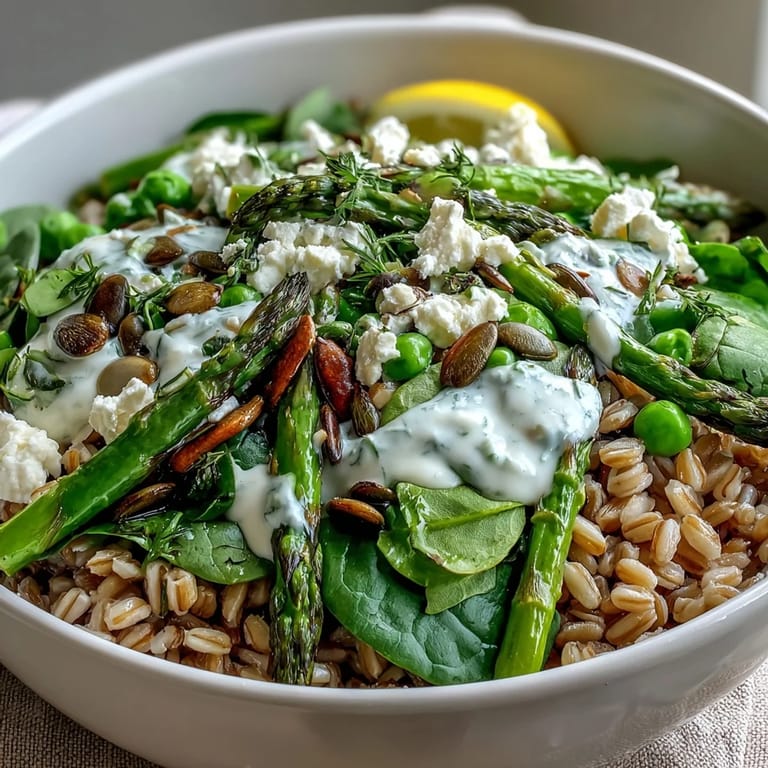
- Divide the cooked grains among four bowls, then arrange the blanched vegetables and spinach on top in whatever way feels appealing to you. Drizzle the dressing over everything and let it settle into the grains a bit.
- Finish with toppings and serve:
- Scatter toasted seeds across the top, add crumbled feta if using it, sprinkle with fresh herbs, and eat it right away while everything is still warm and the colors are still singing.
 Save
Save There's something quietly powerful about a bowl that asks nothing of you except to show up and eat it. I've served this to people who claim they don't like vegetables and watched them come back for seconds, genuinely surprised at how much they enjoyed it. That moment when someone realizes wholesome food can also be delicious—that's when this recipe becomes more than just lunch.
Grain Choices and What They Bring
Quinoa brings a gentle nuttiness and cooks in a flash, making it perfect when you're in a hurry or want something that won't overshadow the vegetables. Brown rice is earthier and more substantial, turning the bowl into something that genuinely fills you up—it's the choice I make when I've had a physically demanding day. Farro splits the difference, with a lovely chewiness that makes you slow down and actually pay attention to eating. The choice matters less than picking one and committing to it, because each grain creates a slightly different eating experience.
Making It Ahead (And Why Timing Matters)
This bowl tolerates being made ahead better than you might expect, but only if you treat the components separately. I've kept cooked grains in the refrigerator for three days and blanched vegetables for two, and they stay fresh when stored in airtight containers. The dressing actually gets better after sitting overnight as the flavors mingle, so making that in advance is actually encouraged. What you absolutely cannot do is assemble the whole bowl and hope it survives until lunch—the dressing will turn the grains into something resembling porridge, which isn't terrible but misses the whole point of the texture play.
Ways to Make It Your Own
This bowl is genuinely flexible, which is why it's become a regular rotation in my kitchen rather than a one-off recipe. Swap the grains for bulgur, couscous, or even wild rice if you're feeling it. Add roasted chickpeas or crumbled tofu for protein without making it heavy. In summer when green beans turn into a bounty, use double that amount and reduce the peas. Toss in fresh herbs like mint, dill, or parsley to change the entire character of the dish. This is home cooking at its best—a template you customize based on what's in your life and your garden, not a rigid formula.
- If asparagus isn't in season, snap peas or baby zucchini work beautifully as stand-ins.
- Toast your own seeds in a dry pan for five minutes instead of buying pre-toasted, and they'll taste fresher and brighter.
- A handful of crispy chickpeas tossed with lemon zest and salt turns this from a side dish into a genuinely satisfying main.
 Save
Save This bowl taught me that nourishing food doesn't need to be complicated or time-consuming to feel special. Make it once and it becomes the kind of recipe you reach for again and again, adjusting it with the seasons and your mood.
Recipe FAQs
- → Can I make this ahead of time?
Yes, prepare the grains and vegetables in advance. Store them separately in airtight containers in the refrigerator for up to 3 days. Keep the dressing in a separate jar and assemble bowls just before serving to maintain freshness.
- → What other grains work well?
Bulgur, couscous, barley, or even roasted sweet potato cubes make excellent bases. Choose grains that hold their texture well and complement the fresh, bright flavors of the spring vegetables.
- → How do I blanch vegetables properly?
Bring salted water to a rolling boil, add vegetables for 2-3 minutes until tender-crisp, then immediately transfer to ice water. This stops the cooking process and preserves the vibrant green color and fresh texture.
- → Can I use frozen vegetables?
Absolutely. Frozen peas work beautifully, and frozen asparagus and green beans can be used when fresh isn't available. Just adjust blanching time slightly as frozen vegetables may cook more quickly.
- → How can I add more protein?
Top with grilled chicken, baked tofu, roasted chickpeas, or a soft-boiled egg. Feta cheese also adds protein. Adjust the garnishes based on your dietary preferences and needs.