 Save
Save There's something grounding about building a bowl from scratch, each component chosen deliberately rather than plated out of habit. I discovered this approach on a Tuesday when my fridge held promise but no clear direction—a handful of roasted vegetables, some legumes I'd cooked the day before, and the realization that they needed a stage. Within an hour, what started as uncertainty became four bowls of actual nourishment, the kind that satisfies without heaviness.
My partner came home to find me arranging avocado slices with the concentration of someone placing tiles in a mosaic, and instead of laughing, they grabbed a bowl and sat down immediately. That's when I knew this wasn't just lunch—it was a moment where food became permission to slow down together.
Ingredients
- Quinoa, brown rice, or farro: Choose your grain based on texture preference—quinoa adds lightness and earthiness, rice brings familiarity, and farro offers chewiness that anchors the bowl.
- Vegetable broth instead of water: It costs nothing extra but adds whisper-soft depth that plain water simply cannot deliver.
- Chickpeas and lentils: This combination gives you protein and fiber without the density of heavier legumes, plus they play well with warm spices.
- Red bell pepper: The sweetness balances roasting's intensity and adds a visual brightness that matters on the plate.
- Zucchini, broccoli, and cherry tomatoes: These three hold their shape beautifully when roasted and develop actual flavor rather than turning mushy.
- Olive oil, smoked paprika, and cumin: This trio creates the savory foundation that makes every vegetable taste intentional.
- Tahini dressing: Sesame seed paste mixed with lemon and garlic transforms from ingredient to the reason you'll make this bowl again next week.
- Fresh parsley, avocado, and pumpkin seeds: These aren't garnishes—they're textural contrasts and final notes that make the bowl feel complete.
Tired of Takeout? 🥡
Get 10 meals you can make faster than delivery arrives. Seriously.
One email. No spam. Unsubscribe anytime.
Instructions
- Heat your oven and set the stage:
- Preheat to 425°F while you work, giving the heat time to build and settle. This temperature roasts vegetables until their edges char slightly without turning them into rubber.
- Start your grains:
- Bring broth and salt to a boil, then add your chosen grain and reduce the heat so it simmers gently under a lid. Each grain has its own timeline—quinoa needs 15 minutes, rice about 40, farro around 25—and knowing when to fluff rather than stir makes all the difference.
- Prepare the vegetables:
- Dice and slice everything into similar-sized pieces so they cook evenly, then toss with olive oil and those warm spices. The oil and seasoning need to coat everything before the baking sheet, not after.
- Roast with intention:
- Spread vegetables in a single layer so steam can escape and charring can happen. Stir halfway through the 20 to 25 minutes—this ensures even browning and prevents the edges from burning.
- Warm your legumes gently:
- A quick pan with olive oil and seasoning revives them if they've been sitting in the cold, taking just 2 to 3 minutes. This step feels optional but tastes essential.
- Build your dressing:
- Whisk tahini with lemon juice, starting with a tablespoon of water and adding more until it reaches a pourable consistency. The garlic should be minced small enough to disappear into the creaminess.
- Assemble with care:
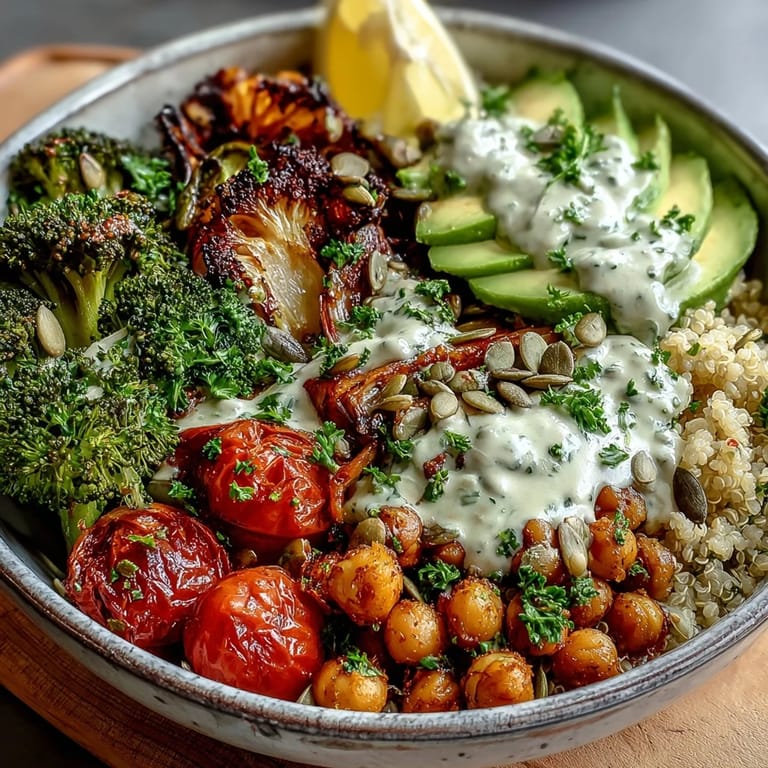
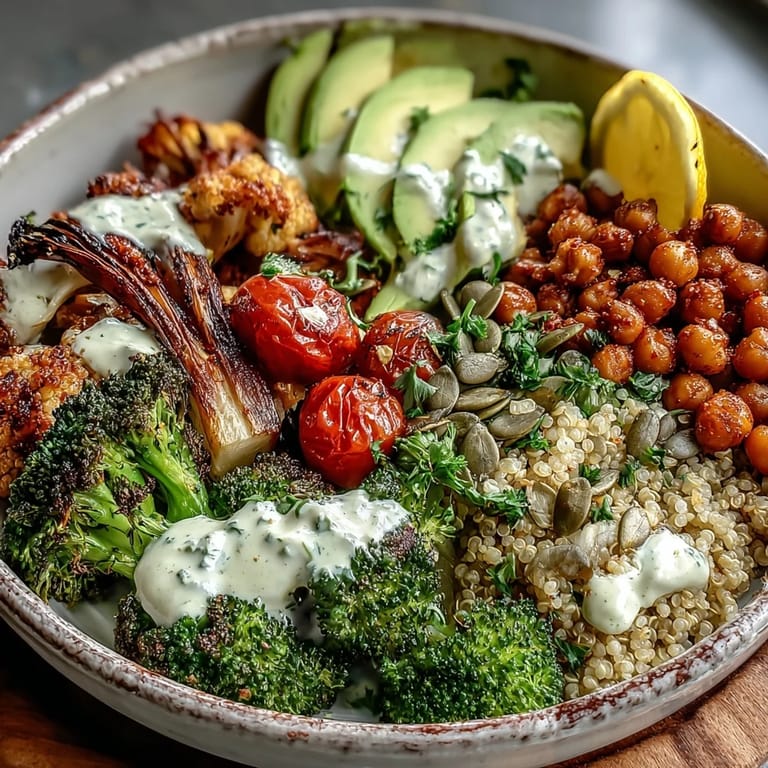
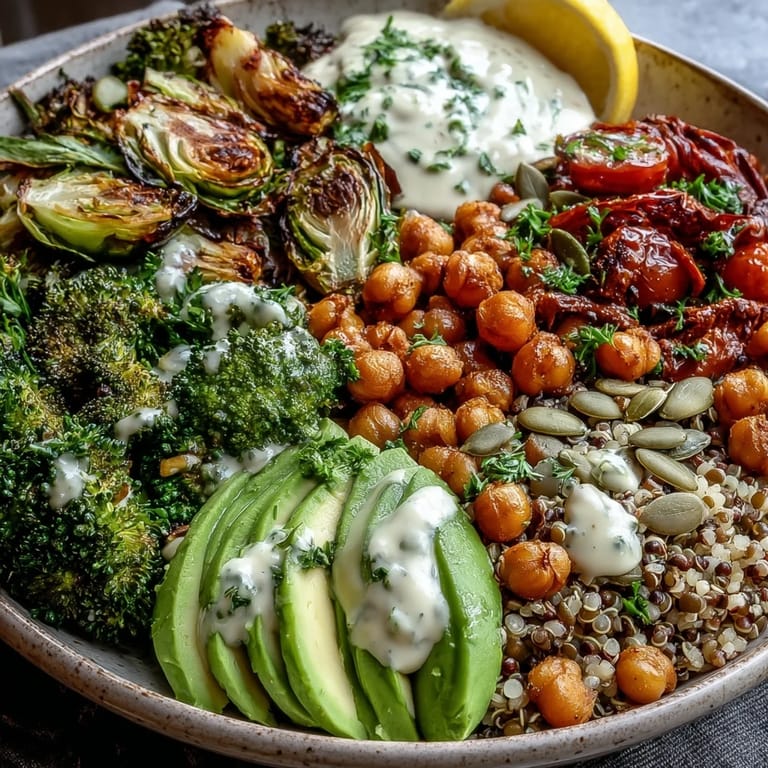
- Divide grains first, then layer roasted vegetables and legumes, creating height and texture. A drizzle of tahini dressing, then parsley, avocado, and seeds arranged like they matter.
 Save
Save One evening I made these bowls for a friend who'd been surviving on delivery food, and watching them taste real vegetables after weeks of none felt like witnessing something shift. Food became conversation, and the bowl became the reason we sat longer than we planned.
Building Your Perfect Bowl
The order of assembly matters more than you'd think. Grains go down first because they need to absorb the tahini dressing while still warm—if you layer them last, they stay dry and separate. The vegetables create texture and temperature contrast, while legumes add both substance and comfort. Every element earns its place.
Adapting for Seasons and Seasons
Summer calls for lighter vegetables like zucchini and tomatoes, while winter welcomes roasted sweet potato and cauliflower. Spring brings fresh peas and tender greens, autumn suggests butternut squash and root vegetables. The formula stays constant, but the vegetables shift with what's actually good right now. This flexibility is why the bowl becomes a regular habit rather than a one-time meal.
Making It Truly Your Own
The beauty of this bowl is that it invites personalization without demanding it. You can add crumbled feta for richness, swap tahini for a ginger-sesame dressing, or pile on fresh herbs beyond parsley. Some people add a fried egg on top, others prefer it cold the next day as lunch. The structure holds—everything else is negotiable.
- If tahini isn't available, a combination of olive oil, lemon juice, and minced garlic works beautifully as an alternative dressing.
- Prep vegetables the night before and they'll roast faster and more evenly the next day, making weeknight cooking feel manageable.
- Toast your pumpkin seeds in a dry pan for 2 minutes before eating—this small act transforms them from pleasant to absolutely essential.
 Save
Save This bowl became the meal I reach for when I want to feel capable and nourished, when I want something that tastes like care without requiring hours. It's become the proof that simplicity and intention often taste the same.
Recipe FAQs
- → What grains work best for this bowl?
Quinoa, brown rice, and farro all work beautifully. Quinoa cooks fastest at 15 minutes, while brown rice takes about 40 minutes. For a gluten-free option, stick with quinoa or certified gluten-free grains.
- → Can I prepare this ahead for meal prep?
Absolutely. The grains, roasted vegetables, and legumes store well in separate containers for 4-5 days. Keep the dressing separate and add fresh garnishes like avocado and parsley when serving.
- → What vegetables can I substitute?
Sweet potato, cauliflower, carrots, Brussels sprouts, or eggplant all roast beautifully. Use whatever is seasonal or available in your kitchen.
- → How do I make the tahini dressing smoother?
Whisk tahini with lemon juice and warm water gradually. The mixture may seize at first but will emulsify into a creamy consistency. Add more water as needed for drizzling.
- → Can I add cheese to this bowl?
Feta or goat cheese crumbles complement the flavors wonderfully. Sprinkle on top after assembling the bowls for a salty, creamy contrast to the roasted vegetables.
- → What's the best way to roast the vegetables?
Spread vegetables in a single layer on a large baking sheet without overcrowding. This ensures proper caramelization. Stir halfway through cooking for even roasting.