 Save
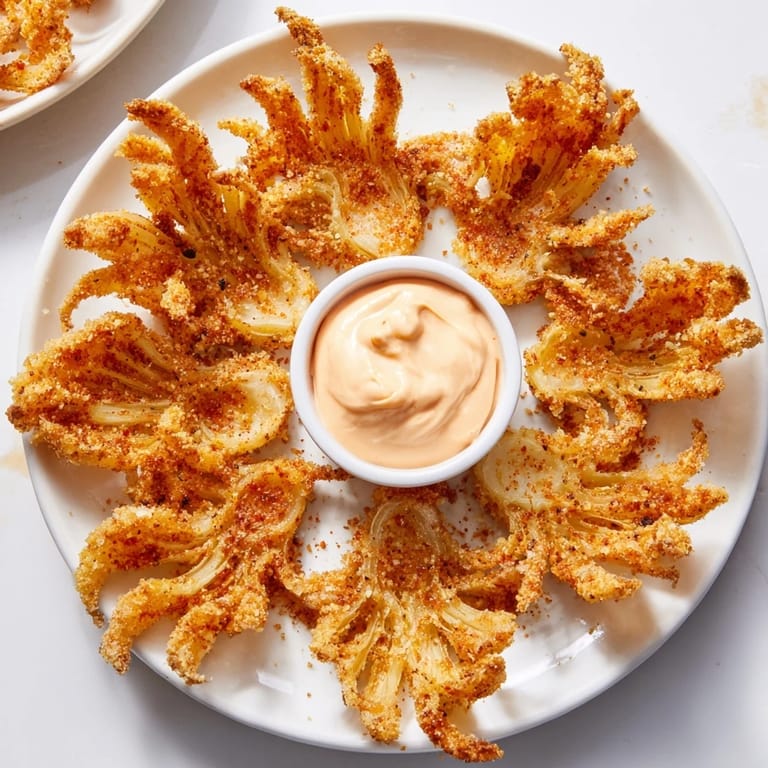
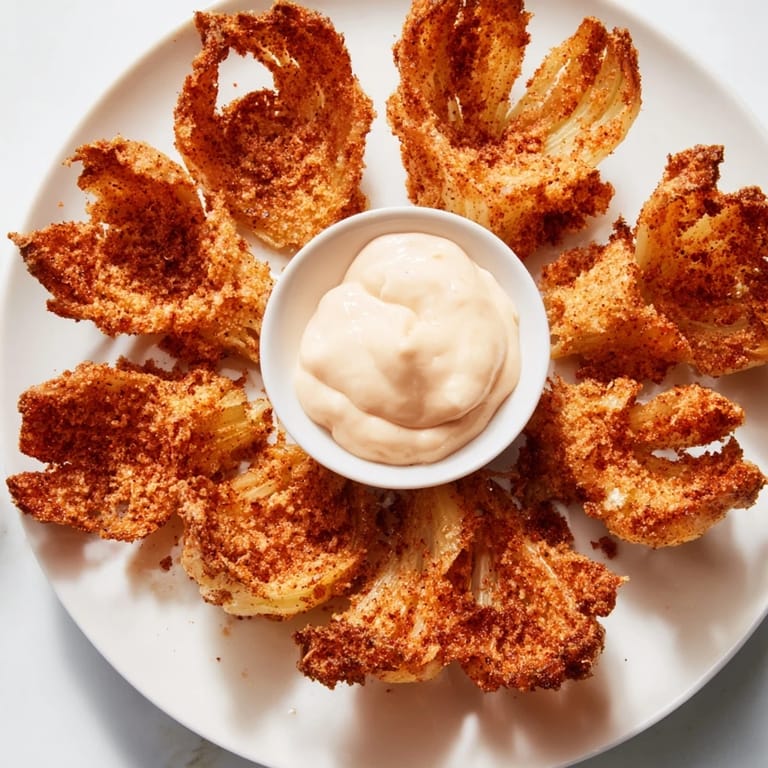
Save I'll never forget the first time I saw a blooming onion on a restaurant table across from me—this massive, golden flower sitting in a shallow bowl of sauce, steam still rising from the crispy petals. I couldn't stop staring at it while eating my dinner. A few months later, I finally decided to attempt one at home, and watching that raw onion transform into something so dramatic and delicious felt like actual kitchen magic. Now it's become my secret weapon for impressing people without spending hours in the kitchen.
I made this for my neighbor's casual dinner party on a random Thursday, and I still laugh remembering how quiet the table got when I set it down. Someone actually gasped. It wasn't complicated or expensive, but it felt like I'd pulled off something culinary. That's when I realized this dish isn't just food—it's theater.
Ingredients
- 1 large sweet onion (Vidalia): Sweet onions have better flavor and hold their shape beautifully when fried, so don't skip the variety—regular yellow onions tend to separate too much.
- 2 1/2 cups all-purpose flour: Standard flour works perfectly for that satisfying crispy coating.
- 2 teaspoons paprika: Gives warmth and color; smoked paprika works too if you want deeper flavor.
- 1 teaspoon garlic powder: Trust me on layering this seasoning—it builds flavor that single-note salt never delivers.
- 1 teaspoon dried oregano: This is what makes people ask what that subtle herb flavor is.
- 1 teaspoon salt, 1/2 teaspoon black pepper, 1/2 teaspoon cayenne: The spice blend is your personality showing through—adjust to what makes you happy.
- 2 large eggs and 1 cup whole milk: This wet mixture acts as the glue between your two flour coats, creating that extra-crispy shell.
- Vegetable oil for frying: Use enough that the onion can actually float and fry evenly, not just sit in a shallow puddle.
- Mayonnaise, sour cream, ketchup, horseradish, smoked paprika, garlic powder, cayenne, salt, pepper: The sauce is where all your flavor edges come together—tangy, creamy, with just enough heat to make people reach for another bite.
Tired of Takeout? 🥡
Get 10 meals you can make faster than delivery arrives. Seriously.
One email. No spam. Unsubscribe anytime.
Instructions
- Make the sauce first, then forget about it:
- Whisk together mayo, sour cream, ketchup, horseradish, smoked paprika, garlic powder, cayenne, salt, and pepper in a bowl. Toss it in the fridge while you work—it tastes even better cold and gives the flavors time to get friendly with each other.
- Carve your onion into a blossom:
- Peel the onion and slice 1/2 inch off the top, keeping the root completely intact—that's your anchor. Place it cut-side down, then starting 1/2 inch from the root, make vertical cuts all around the onion to create 12–16 sections, never cutting through to the root. Flip it over gently and coax those petals open with your fingers until it actually looks like a flower.
- Build your seasoned flour mixture:
- Combine flour, paprika, garlic powder, oregano, salt, black pepper, and cayenne in a large bowl and give it a good whisk so the spices are evenly scattered. This is going to coat your onion twice, so make sure you've got enough.
- Create the wet mixture:
- Beat eggs with milk together until they're combined and slightly foamy. This is your binding layer.
- First coat: flour:
- Dredge the onion in the flour mixture, really working it between the petals so every crevice gets coverage. Shake off the excess gently but firmly—you want coating, not clumps.
- Second coat: egg wash:
- Dip the whole floured onion into your egg mixture, tilting it so the liquid gets into all those petal gaps. Don't overthink it—just let gravity and the liquid do the work.
- Third coat: flour again for the crunch:
- Back into the flour mixture for a second round, pressing just slightly so it adheres without compacting everything. Shake off excess one more time.
- Heat your oil properly:
- Pour at least 3 inches of vegetable oil into a deep pot or fryer and heat it to 375°F (190°C). This temperature is crucial—too cool and you get a greasy mess, too hot and it burns before cooking through. Use a thermometer if you have one.
- Fry with confidence:
- Using a slotted spoon or spider, lower the onion cut-side down into the hot oil carefully—it'll bubble and hiss immediately. Fry for 6–8 minutes total, rotating occasionally with your spider so all sides get golden and crispy evenly.
- Drain and finish:
- Lift the onion out and set it on paper towels. While it's still hot, sprinkle a tiny bit of salt over it—the salt sticks better and the heat brings out its flavor.
- Plate and serve immediately:
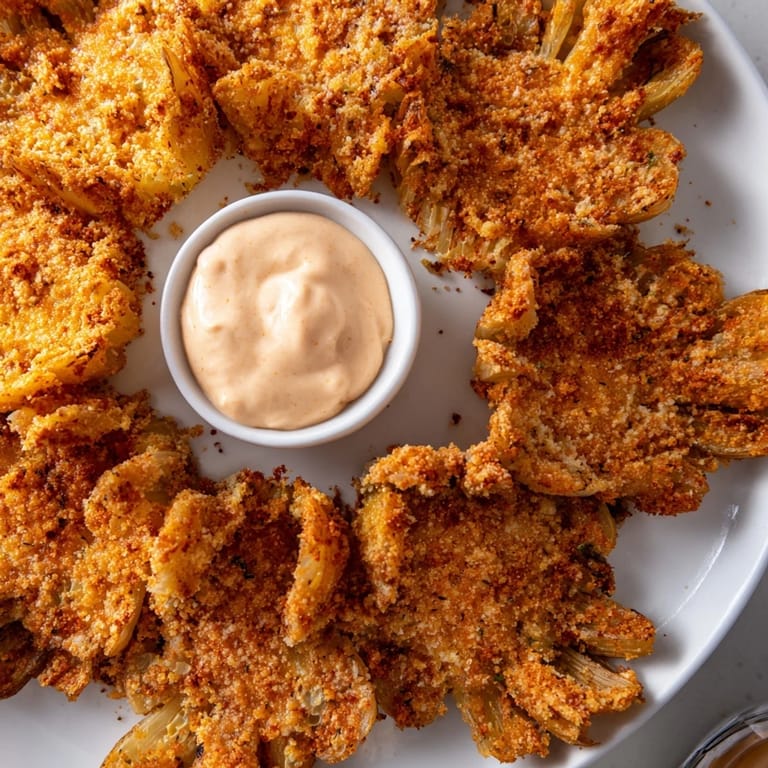
- Transfer to a plate or shallow bowl with your sauce ready to go. The moment it hits room temperature, some of that crispy magic fades, so don't wait.
 Save
Save The best part? Watching someone eat this for the first time and seeing their face when they realize it's just an onion. There's something special about food that feels like it belongs in a restaurant but came straight from your kitchen.
Oil Temperature Matters More Than You Think
I learned this the hard way by attempting this recipe with oil I thought was hot enough. It wasn't. The result was a soggy, greasy disappointment that broke my heart a little. Now I always grab my thermometer, and the difference is night and day. When the oil is exactly 375°F, the outside crisps in seconds while the onion inside stays tender and slightly sweet.
Why You Need a Spider or Slotted Spoon
Regular tongs will tear the delicate petals and cause them to separate, or worse, break off into the oil. A spider skimmer or slotted spoon gently cradles the whole thing and lets excess oil drain right through without damaging your masterpiece. It's one of those tiny tools that feels unnecessary until you actually need it.
The Sauce is Your Canvas
Everyone talks about the onion, but the sauce is where you make this recipe your own. The base recipe is solid, but I've experimented with adding sriracha, extra horseradish, fresh herbs, or even a splash of hot sauce.
- Taste as you go and adjust the heat and tang to match your preferences.
- Make the sauce at least an hour ahead so flavors have time to meld together.
- A cold sauce against the hot crispy onion is the perfect contrast that keeps people coming back for more.
 Save
Save This dish has earned its place in my rotation not because it's complicated, but because it delivers joy every single time. Make it, watch people's faces light up, and enjoy being the person who pulled off something special.
Recipe FAQs
- → What type of onion works best?
Sweet onions like Vidalia give a mild, balanced flavor and hold their shape well during frying.
- → How do I keep the petals separated?
Carefully cut around the onion without slicing through the root, then gently separate the petals by hand.
- → What frying temperature is ideal?
Maintain oil at 375°F (190°C) for a crispy golden crust without sogginess.
- → Can I prepare the dipping sauce in advance?
Yes, refrigerate the sauce until serving to allow flavors to meld.
- → How can I add extra heat?
Add cayenne pepper or chili powder to the flour coating for a spicier bite.
- → What tools help with slicing?
A blooming onion cutter or a sharp chef's knife makes precise cuts easier.