 Save
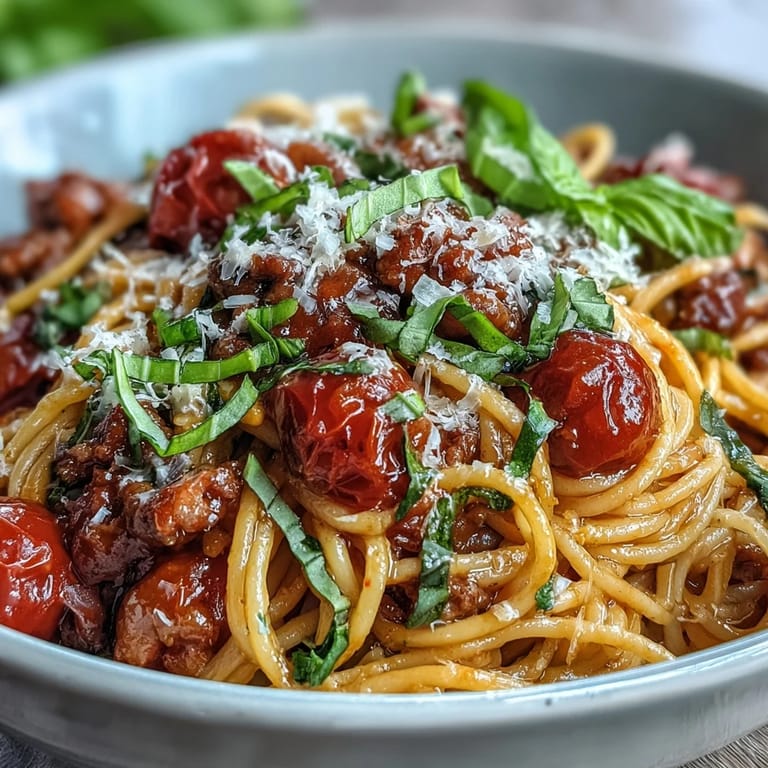
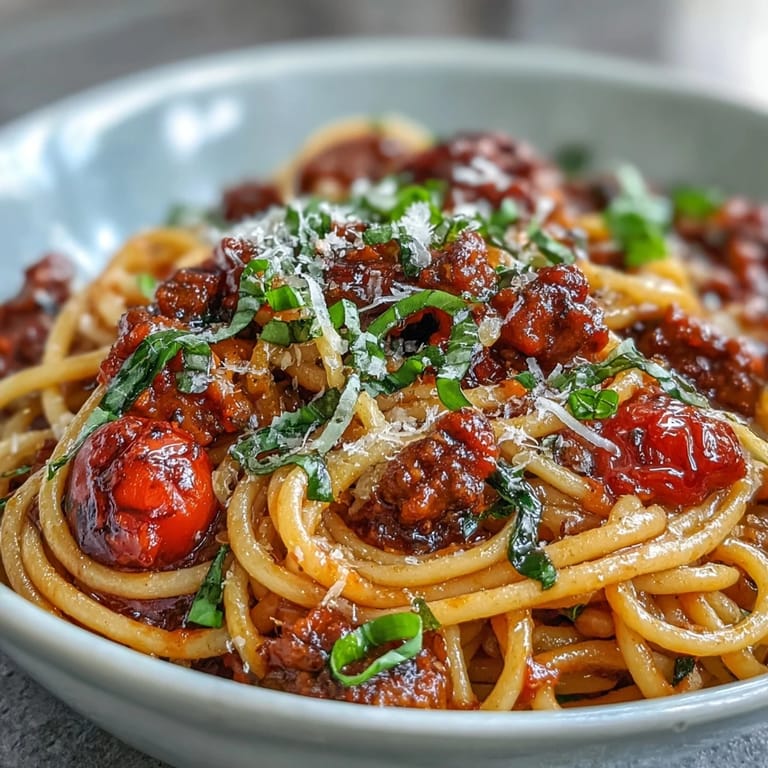
Save There's something almost reckless about dumping a generous pour of Chianti into a sizzling skillet at dinner time, especially when you're cooking for people who expect something recognizable. That's exactly what happened the night I first made Italian Drunken Noodles—a dish born from combining two cuisines I loved but had never seen together before. The result was a bold, wine-kissed pasta that tasted like both a Roman trattoria and a Bangkok street stall decided to collaborate, and somehow it just worked. My guests kept asking for the recipe between bites, and I realized I'd stumbled onto something that felt both adventurous and deeply comforting.
I still think about the afternoon my neighbor caught the smell of garlic and red wine drifting through our shared wall and just knocked on the door mid-cook. I ladled her a bowl straight into a pasta dish without even finishing mine first, and she sat at my counter silently for a moment before saying, "What is this?" When I explained the fusion concept, she laughed and said it shouldn't work but absolutely does. That impromptu dinner became a regular thing, and this pasta was always what she'd request when she wanted me to make something that felt like both comfort and adventure.
Ingredients
- 12 ounces spaghetti or linguine: Use whatever pasta shape calls to you, but thinner strands like spaghetti let the sauce cling beautifully and show off all those gorgeous tomato pieces and herbs.
- 2 tablespoons extra-virgin olive oil: This is where your money matters—good olive oil carries flavor that cheap versions simply can't, and it's what gives the dish its silky finish.
- 1 small yellow onion, thinly sliced: The sweetness of onion balances the spice and wine, and thin slices mean it cooks down into almost nothing, creating a subtle sweetness throughout.
- 4 garlic cloves, minced: Don't bother with pre-minced; fresh garlic makes such a noticeable difference that you'll taste the decision to take 30 seconds and do it yourself.
- 1 teaspoon red pepper flakes: Start here and taste as you go—this is your heat gauge, and everyone's tolerance is different, so you're in control.
- 8 ounces Italian sausage or peeled shrimp: Sausage gives you richness and depth; shrimp keeps things lighter and bright, so choose based on your mood and what's calling to you that evening.
- 1 pint cherry tomatoes, halved: Fresh tomatoes are essential here because they soften into the sauce while keeping their identity—you want to taste the tomato, not cook it away entirely.
- 2 tablespoons tomato paste: This concentrate deepens the sauce and thickens it slightly, turning what could be a watery dish into something luxurious and clingy.
- ½ cup dry red wine: Chianti or Sangiovese work beautifully because they have enough acidity and tannin to stand up to the soy sauce and not disappear into sweetness.
- 2 tablespoons soy sauce: This is the secret weapon that bridges Italian and Asian flavors—it adds umami and a gentle saltiness that makes everything taste more like itself.
- 1 tablespoon Worcestershire sauce: Another umami hit, plus a tangy depth that keeps the sauce from feeling one-dimensional.
- 1 teaspoon balsamic vinegar: Just enough to add a whisper of sweetness and complexity without making anyone taste vinegar specifically.
- ½ cup fresh basil leaves, roughly torn: Tear by hand rather than chopping so the leaves bruise slightly and release their oils right before serving.
- 2 tablespoons chopped fresh parsley: Parsley adds a bright, almost peppery freshness that keeps the rich sauce from feeling heavy.
- ¼ cup grated Parmesan cheese: This melts into the warm pasta and becomes part of the sauce, so use real Parmigiano-Reggiano if you can—it tastes like a completely different ingredient than the pre-grated stuff.
- Salt and freshly ground black pepper: Taste as you build the sauce, because between the soy sauce, Worcestershire, and wine, you might not need as much salt as you'd expect.
Tired of Takeout? 🥡
Get 10 meals you can make faster than delivery arrives. Seriously.
One email. No spam. Unsubscribe anytime.
Instructions
- Boil your pasta water:
- Fill a large pot about three-quarters full with water, salt it generously (it should taste like sea water), and bring it to a rolling boil. This is your foundation, so don't rush it.
- Cook the pasta:
- Add pasta and stir immediately so it doesn't stick, then cook until just al dente—that moment when it's tender but still has a tiny bit of resistance when you bite it. Reserve one cup of starchy cooking water before draining, because this liquid gold is what binds the sauce to the noodles later.
- Heat your skillet:
- While pasta cooks, get a large skillet screaming hot over medium-high heat, then add olive oil and let it shimmer before proceeding. This temperature is crucial—you want a proper sear, not a gentle simmer.
- Build your flavor base:
- Toss in sliced onion and let it sit for a minute without stirring, then stir and cook for 2 to 3 minutes until the edges soften and the kitchen smells undeniably good. Add minced garlic and red pepper flakes, stirring constantly for just 30 seconds—this is the most fragrant moment of cooking, and you don't want to burn those delicate garlic pieces.
- Cook your protein:
- Add sausage and break it into bite-sized pieces as it cooks, letting it brown for 5 to 7 minutes until golden and cooked through; if using shrimp, give it 2 to 3 minutes per side until it turns pink and opaque. Don't crowd the pan or stir obsessively—let things make contact with the hot surface and develop some color.
- Add tomatoes and paste:
- Stir in halved cherry tomatoes and tomato paste, cooking for about 2 minutes while gently mashing some of the tomatoes against the side of the skillet to release their juices. This is where the sauce starts becoming something cohesive.
- Deglaze with wine:
- Pour in your red wine, scraping up every browned bit stuck to the bottom of the pan—that's flavor you don't want to waste. Let it bubble and reduce by about half, which concentrates the wine's complexity and burns off the harsh alcohol edges.
- Finish the sauce:
- Stir in soy sauce, Worcestershire, and balsamic vinegar, then taste and adjust seasoning with salt, pepper, or more red pepper flakes based on what your palate is telling you. This is your moment to make it yours.
- Marry pasta to sauce:
- Add your drained pasta to the skillet and toss everything together, adding reserved pasta water a few tablespoons at a time until the sauce clings to the noodles like it's supposed to be there. The starch in that water helps emulsify the sauce into something creamy and luxurious.
- Finish with herbs and cheese:
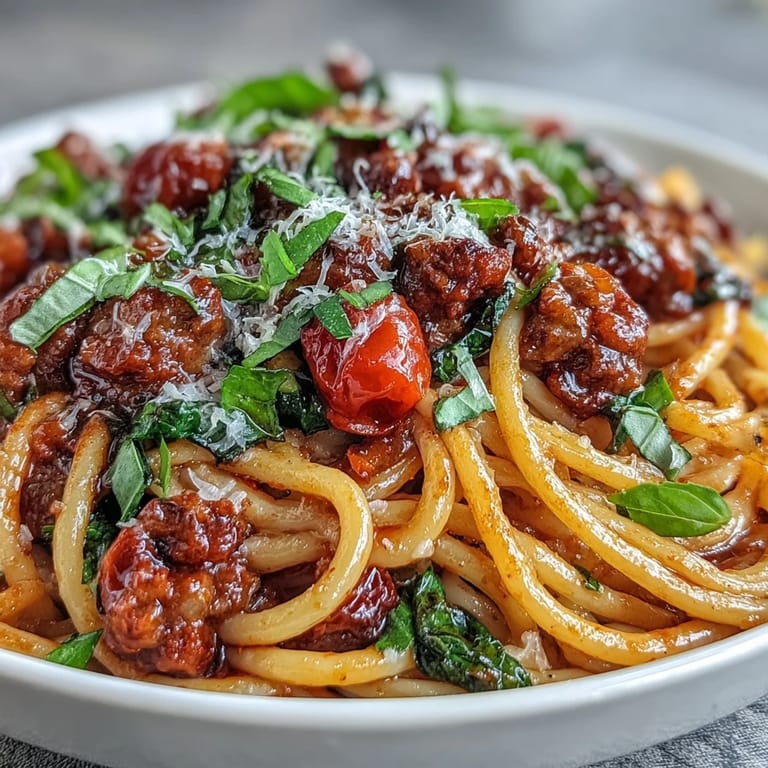
- Remove from heat and stir in torn basil, parsley, and Parmesan until the cheese melts and distributes evenly, coating every strand. Don't cook over heat at this point—you want fresh herb flavor, not cooked-down sadness.
- Plate and garnish:
- Divide among bowls and top with extra basil leaves, a small handful of extra Parmesan, maybe some sliced fresh chili if you like heat, and a lemon wedge for brightness. The lemon is the final surprise—a squeeze before each bite lifts everything up.
 Save
Save There was a moment during a dinner party where someone took a bite, closed their eyes, and just sat in silence for a second before saying, "This shouldn't exist, but I'm so glad it does." That comment stayed with me because it captured exactly what I love about this dish—it's a conversation between two completely different food traditions, and somehow that conversation feels both familiar and completely unexpected. It reminded me that the best cooking isn't always about following tradition; sometimes it's about trusting your instincts and finding beauty in the collision of different ideas.
The Wine Matters More Than You'd Think
I learned this the hard way by using a leftover wine I'd been meaning to finish for three days. The pasta was fine, but it tasted thin and sharp, like something was missing underneath. The next time I used a proper Chianti, and suddenly there was this velvety undertone that made the whole dish feel sophisticated and complete. Wine doesn't just add liquid to a sauce—it adds a flavor profile, tannins, and acidity that anchor everything else, so treat it like an ingredient rather than something to use up.
Why Soy Sauce Belongs in This
When I first added soy sauce to an Italian pasta sauce, my partner looked at me like I'd made a mistake. But that umami depth is exactly why Italian cooking traditionally uses Parmesan and anchovies—it's all about layering savory complexity. The soy sauce does the same thing, only it adds an almost meaty richness that makes the sausage taste deeper and the shrimp taste more like itself. It's fusion cooking at its best: taking what works in one tradition and letting it elevate another, without either one feeling out of place.
Serving and Variations That Actually Work
The beauty of this dish is that it adapts without losing its soul—I've made it with mushrooms and marinated tofu for vegetarian friends, whole wheat pasta for health-conscious dinners, and even swapped linguine for thick, chewy noodles when I was feeling adventurous. Each time, the sauce holds everything together and delivers that signature wine-kissed boldness you're after. The key is remembering that the sauce is what makes this dish what it is; the protein and pasta are just the vehicle.
- For vegetarian: use sautéed mushrooms or crumbled tofu, and let them cook until they develop color and release their moisture.
- For extra heat, include sliced fresh red chili peppers in the garnish or mixed directly into the sauce while it simmers.
- Pairs beautifully with crisp green salad and a glass of the same wine you used in the pan, because consistency in flavor is its own kind of poetry.
 Save
Save This dish has become my answer to "what should I make when I want to feel like I've accomplished something in the kitchen without spending all evening there." It's bold and unexpected enough to feel special, practical enough to make on a Tuesday, and flexible enough to work with whatever you have on hand or whatever your guests can eat.
Recipe FAQs
- → What makes Italian drunken noodles unique?
This dish marries Italian pasta traditions with Asian-inspired flavors through the addition of soy sauce and Worcestershire, while red wine creates a rich, reduced sauce that clings beautifully to noodles.
- → Can I make this vegetarian?
Absolutely. Substitute the sausage or shrimp with sautéed mushrooms or marinated tofu for a satisfying plant-based version that maintains the dish's savory depth.
- → What type of wine works best?
Chianti or Sangiovese are ideal choices as they're dry Italian reds that complement the tomatoes and provide authentic flavor, though any dry red wine will work.
- → How spicy is this dish?
The heat level is easily adjustable with red pepper flakes. Start with one teaspoon for medium spice, reduce for mild flavors, or increase with fresh chilies for extra kick.
- → Can I prepare this in advance?
Leftovers store well refrigerated for up to 3 days. Reheat gently with a splash of water or wine to restore the sauce's silky consistency before serving.