 Save
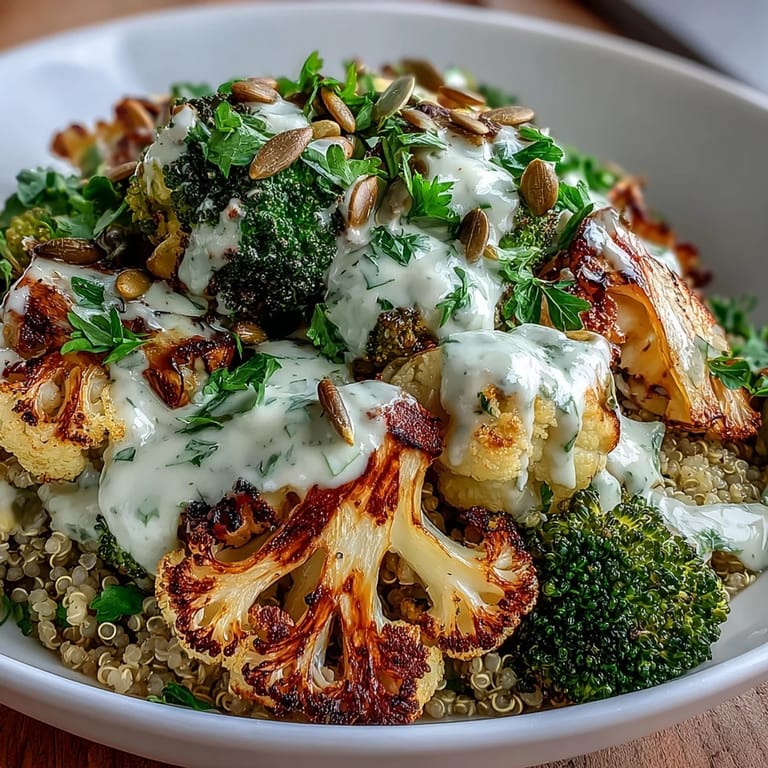
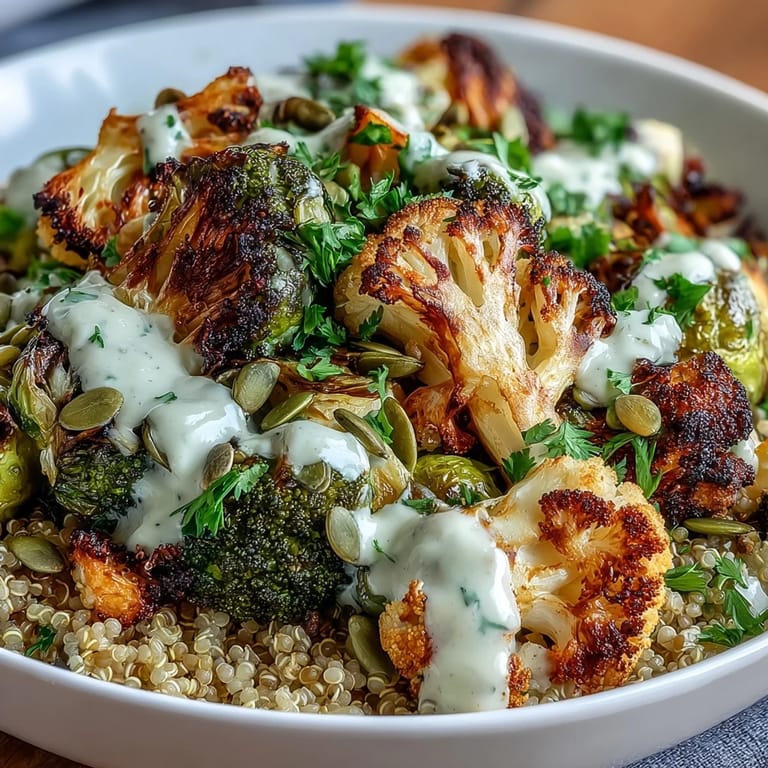
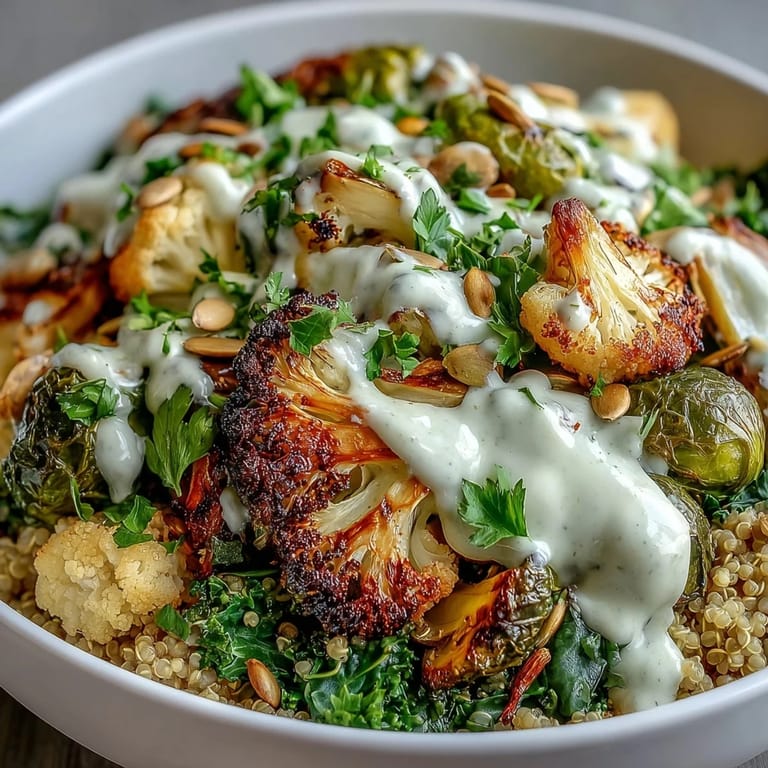
Save There's something about a sheet pan of roasted vegetables that just gets it right—no fuss, no pretense, just pure golden-edged goodness coming out of the oven. I stumbled onto this bowl on a Tuesday evening when I had broccoli, cauliflower, and Brussels sprouts staring me down from the crisper drawer, all competing for my attention. Rather than pick favorites, I threw them all together with olive oil and let the oven do the heavy lifting, and what emerged was this beautiful, chaotic mix of textures that tasted infinitely better than any one vegetable could manage alone. The tahini-lemon dressing was an afterthought—literally something I whisked together while the vegetables browned—but it became the glue that tied everything into something genuinely craveable. Now it's the bowl I make when I want to feel nourished without spending hours in the kitchen.
My partner once watched me assemble this bowl and said, 'Wait, you made this?' like I'd just pulled off some culinary sleight of hand, when really I'd just roasted vegetables and drizzled them with tahini. That moment stuck with me because it reminded me that simple food done thoughtfully reads as impressive, and sometimes the best meals are the ones that don't announce themselves loudly. Since then, I've made this bowl for lazy Sundays, for bringing to friends' places, for nights when the fridge is a question mark. It's become my reliable answer to 'what should I eat that won't leave me feeling sluggish?'
Ingredients
- Broccoli: One whole head cut into florets—those little trees are what catch the heat and develop the caramelized edges that make this bowl sing.
- Cauliflower: A small head broken into florets; it's milder than broccoli but soaks up seasoning beautifully and gets wonderfully tender inside with crispy edges.
- Brussels sprouts: 250 grams trimmed and halved; halving them is key because it gives you flat surfaces to brown and creates those addictive crispy, charred bits.
- Olive oil: Two tablespoons may sound modest, but it's enough to coat everything evenly without making the vegetables greasy.
- Sea salt and black pepper: Season generously here because roasted vegetables need it more than you think to develop their flavor.
- Grains: About one cup uncooked (yields roughly 2 cups cooked); quinoa is my default for its texture, but brown rice and farro work beautifully too.
- Tahini: Three tablespoons of this sesame paste becomes silky dressing when you coax it with lemon juice and water—don't skip the whisking.
- Fresh lemon juice: Use freshly squeezed, not bottled; it's the brightness that prevents the dressing from feeling heavy.
- Maple syrup or honey: Just a tablespoon rounds out the tahini's earthiness and balances the tartness of the lemon.
- Garlic: One small clove finely grated delivers punch without overwhelming the dressing's delicate balance.
- Pumpkin seeds and fresh parsley: Optional toppings, but the pumpkin seeds add a satisfying crunch and the parsley brings color and a whisper of freshness.
Tired of Takeout? 🥡
Get 10 meals you can make faster than delivery arrives. Seriously.
One email. No spam. Unsubscribe anytime.
Instructions
- Heat your oven and prep your pan:
- Preheat to 220°C (425°F) and line a large baking sheet with parchment paper—this prevents sticking and makes cleanup almost laughably easy. The parchment is non-negotiable; it's the difference between vegetables that slide around and ones that stay put.
- Coat the vegetables:
- Toss your broccoli, cauliflower, and Brussels sprouts together in a large bowl with the olive oil, salt, and pepper until everything is evenly coated. Take a moment here to make sure nothing's hiding underneath without oil—this is where even coverage decides whether you get golden edges or pale spots.
- Spread and roast:
- Arrange the vegetables in a single layer on the prepared sheet, cut-side down where possible so they can brown properly. Roast for 25 to 30 minutes, stirring halfway through, until the edges are golden and caramelized and the insides are tender enough to pierce with a fork.
- Cook your grains:
- While the vegetables roast, prepare your chosen grain according to package directions. Once cooked, fluff it gently with a fork and let it sit covered so it stays warm and separate.
- Whisk the dressing:
- In a small bowl, combine tahini, fresh lemon juice, maple syrup or honey, finely grated garlic, and a pinch of salt, whisking until smooth. Add water gradually—starting with 2 tablespoons and working up to 3—until the dressing is pourable but still has body; it should coat a spoon without dripping off immediately.
- Build the bowl:
- Divide the warm grains among four bowls, then top each with a generous portion of roasted vegetables. Drizzle the tahini-lemon dressing over everything, letting it pool slightly in the center.
- Finish with toppings:
- Scatter pumpkin seeds and chopped fresh parsley over each bowl, and add a pinch of chili flakes if you like a whisper of heat. Serve immediately while the vegetables are still warm and the grains haven't cooled completely.
 Save
Save I made this bowl one evening when my mother was visiting, and she ate it quietly, methodically, the way she does when something's really working for her. Halfway through, she asked for the dressing recipe, and watching her drizzle it over her bowl a second time felt like a small victory—proof that vegetables don't need to be complicated or fussy to be genuinely good. That bowl became part of our regular rotation after that, something we'd both reach for on evenings when we wanted to eat well without theater.
Grain Choices That Change Everything
Quinoa is my standard because it has enough texture to stand up to the roasted vegetables and the dressing without disappearing into the mix. But brown rice brings an earthiness that feels almost nutty against the tahini, and farro—with its chewy bite—transforms the whole bowl into something that demands to be chewed slowly and savored. Millet is lighter and works beautifully if you want something less substantial, and even couscous becomes elegant here if you're in the mood for something that feels almost like a pilaf. The grain you choose changes the personality of the bowl, so choose based on your mood and what's in your pantry.
Making This Bowl Your Own
The beauty of this recipe is that it's a framework, not a mandate—I've made it with roasted chickpeas stirred in, with crumbled feta scattered over the top, with a fried egg perched on the grains like it's the centerpiece. Some mornings I've added fresh herbs like cilantro or mint, other times I've sprinkled sumac or smoked paprika over the vegetables before roasting for a completely different flavor profile. Think of it as your canvas; the roasted vegetables and tahini-lemon dressing are the base, and everything else is you making it speak your language.
Timing and Prep Wisdom
This bowl teaches you that most of your actual effort is up front—chopping vegetables and getting them in the oven—and then the hardest thing you do is wait. The roasting requires almost no intervention once you've stirred vegetables halfway through, which means you can prep your dressing, tidy your kitchen, or just sit down while the oven does the work. It's honest cooking: simple ingredients, straightforward technique, and the kind of timing that lets you breathe.
- If you're meal-prepping, roast the vegetables a day ahead and store them in the fridge; they're equally good cold or reheated gently.
- The dressing lasts several days refrigerated, and actually tastes better the next day once the flavors have settled into each other.
- Assemble bowls only when you're ready to eat so the warm grains and vegetables meet cold dressing in that perfect moment of temperature contrast.
 Save
Save This bowl has become my answer to 'what's for dinner?' when I want something that feels nourishing without tasting virtuous, that comes together quickly but tastes like you've given it thought. It's a bowl that welcomes adaptation and invites you to build on its bones with whatever you have on hand or whatever you're craving.
Recipe FAQs
- → What vegetables work best in this bowl?
Broccoli, cauliflower, and Brussels sprouts are ideal because they roast at similar rates and develop sweet, nutty flavors. You can also add kale or shredded Brussels sprouts for variety.
- → Can I make this ahead?
Absolutely. Roast the vegetables and cook the grains up to 3 days in advance. Store the dressing separately and assemble just before serving for the best texture.
- → What grains should I use?
Quinoa, brown rice, and farro all work beautifully. Choose quinoa for quick cooking, brown rice for nuttiness, or farro for a chewy texture that holds up well.
- → Is the dressing adjustable?
Yes. Add more water for a thinner consistency, less for thicker. Increase maple syrup for sweetness or add more lemon juice for brightness. The dressing keeps refrigerated for up to a week.
- → How do I add more protein?
Stir in roasted chickpeas, pan-fried tofu cubes, or crumbled feta cheese. You can also serve with poached eggs or grilled chicken on the side for a non-vegetarian option.
- → Can I freeze this?
The roasted vegetables and cooked grains freeze well separately for up to 3 months. Thaw overnight in the refrigerator and refresh vegetables in a warm oven before assembling with fresh dressing.